Showing posts with label #JeffBurns. Show all posts

Sunday, October 7, 2018

Civil War in the First Person

By Jeff Burns

The Civil War was a major departure from previous wars in a number of ways, new technologies, strategies, and tactics made it a truly modern war.  It was also unique in that so many participants wrote about their experiences, both on the battlefield and on the homefront.  There are so many first person primary sources that one could spend years reading them.


Among the most famous examples is the diary of Mary Chesnut. “One of the most compelling personal narratives of the Civil War, Mary Chesnut's Diary was written between 1861 and 1865. As the daughter of a wealthy plantation owner and the wife of an aide to the Confederate President, Jefferson Davis, Chesnut was well acquainted with the Confederacy's prominent players and-from the very first shots in Charleston, South Carolina-diligently recorded her impressions of the conflict's most significant moments. One of the most frequently cited memoirs of the war, Mary Chesnut's Diary captures the urgency and nuance of the period in an epic rich with commentary on race, status, and power within a nation divided.” (Amazon.com description)

Another phenomenal diary has just been published. LeRoy Gresham was a young teen boy in Macon Georgia, the son of a wealthy planter.  Because of an injury and chronic illness, he was mostly incapacitated during the war, but he kept very insightful journals that have just been edited.  LeRoy displays a poise and intelligence well beyond his years as he recounts the parallel deteriorations of his own body and of the Confederacy; he is able to see things about both subjects that the adults around him can’t, or refuse, to see.  Many reviewers compare this diary to Anne Frank’s, and I don’t think that’s necessarily hyperbole.


Also recently published is Barracoon, by novelist, anthropologist, and folklorist Zora Neale Hurston. It is basically the annotated transcript of months of interviews Hurston had with Cudjo Lewis in 1927 and 1928. Why Lewis? He was the last surviving person brought to the United States as a slave, after the importation of slaves was outlawed in 1808. Cudjo Lewis was one about 130 Africans sold to American slavers and brought to America on board the Clothilde, the last ship known to bring enslaved Africans to the U.S. Lewis’ story is thoroughly engrossing. He has rich recollections of his life and culture in Africa and of his life as a slave.  It is an incredible story.


Civil War soldiers were, on the whole, very literate compared to soldiers of past conflicts. Many letters, written by and to soldiers, have survived. Ken Burns practically launched his filmmaking career based on that fact.  From Fields of Fire and Glory is an interesting collection, done in the “museum in a book” style.  The letters are reprinted and annotated, but they also appear as facsimiles of the originals that the reader can pull out, unfold, and handle, becoming an archivist as well as a reader.

Sunday, September 2, 2018

Brothers

By Jeff Burns

The brotherly bond can be a strong one, and it is a common theme in many books.  Here are four books about brothers that focus on that relationship and on history.


Taylor Brown’s The River of Kings is a novel set on the past and present coast of Georgia. I grew up near the Altamaha and spent many weekends fishing on the river as a child, so this book really hit home.  I can’t say anything else about it better than the Amazon.com description: “The Altamaha River, Georgia’s “Little Amazon,” is one of the last truly wild places in America. Crossed by roads only five times in its 137 miles, the black-water river is home to thousand-year-old virgin cypress, direct descendants of eighteenth-century Highland warriors, and a staggering array of rare and endangered species. The Altamaha is even rumored to harbor its own river monster, as well as traces of the oldest European fort in North America.

Brothers Hunter and Lawton Loggins set off to kayak the river, bearing their father’s ashes toward the sea. Hunter is a college student, Lawton a Navy SEAL on leave; they were raised by an angry, enigmatic shrimper who loved the river, and whose death remains a mystery that his sons are determined to solve. As the brothers proceed downriver, their story alternates with that of Jacques le Moyne, the first European artist in North America, who accompanied a 1564 French expedition that began as a search for riches and ended in a bloody confrontation with Spanish conquistadors and native tribes. “ It’s well worth the read, and I’m encouraged to read more of Brown’s work.

I heard Deanne Stillman speak about her book  Blood Brothers: The Story of the Strange Friendship Between Sitting Bull and Buffalo Bill at the Savannah Book Festival in February.  While not brothers by blood in the literal sense, Buffalo Bill Cody and Sitting Bull lived lives that had remarkable parallels and led them to a strong brotherly bond in their later years.  It makes for a very interesting story.


The Kelloggs: The Battling Brothers of Battle Creek by Howard Markel is about an entirely different brotherly relationship.  Yes, it’s those Kellogg brothers.  One was an internationally renowned physician who promoted an entirely new vision of health and wellness at the turn of the 20th century. The other was his long-suffering (at the hands of his brother) right hand, who was the brains behind the creation of a brand new industry: prepackaged breakfast grain foods.  Their relationship was unique to say the least, and this book provides an interesting look at how it all started.

Finally, a book I’ve discussed in an earlier blog: The Oregon Trail by Rinker Buck. This is a true story of two brothers who outfit a covered wagon and follow the Oregon Tail west – 2000 miles – in the 21st century.  It’s a great adventure book, but it’s also a great book about the relationship between the Buck brothers.

Sunday, August 5, 2018

Three Books on Race

By Jeff Burns

Here are three books on race in America that I highly recommend.


When I was a teenager in South Georgia, I remember the news coverage of the civil rights marches in Forsyth County Georgia and Oprah Winfrey, at the time a relatively new talk show host, dedicating an episode of her show to the “whites only” county north of Atlanta. Stories referred to the 1912 purge of the counties black residents.  I couldn’t believe such a thing was possible.  Blood at the Root by Patrick Phillips tells the full story of the “cleansing” of the county and the events leading up the 1987 marches. 

I teach the story of Emmett Till every year.  Not only is it a story or unimaginable tragedy and brutality, it is also considered a seminal moment in the civil rights movement.  Till’s murder is considered by many to be the catalyst of the modern civil rights movement. It was fresh in the minds of Rosa Parks, Martin Luther King Jr, and the others involved in the Montgomery Bus Boycott. Yet, too many Americans do not know the story. Timothy Tyson’s book is an essential read on the topic. Perhaps the most important part of the book is Tyson’s interview with Carolyn Bryant, the white woman who accused Till of disrespecting her – the incident that led to his murder.

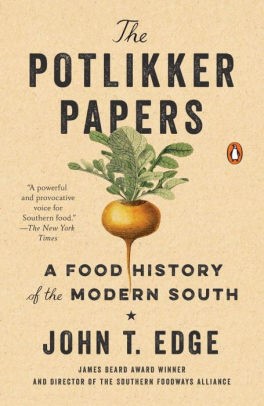
The Potlikker Papers by John T. Edge is an original take on the 20th century civil rights movement.  Edge tells the story of the movement through the lens of food, how southern food simultaneously unites and divides black and white southerners.  It is one of my favorite reads of the last year, and I was privileged to hear Mr. Edge speak at the Savannah Book Festival in February and to talk with him for a moment afterwards.  Here are some quotes about the book:

“To read “Potlikker” is to understand modern Southern history at a deeper level than you're used to. Not  just a history of Southern food; it also stands as a singularly important history of the South itself.” —The Bitter Southerner 

“Edge, director of the Southern Foodways Alliance at the University of Mississippi, uses food as a lens to explore Southern identity, seeking to reconcile a legacy of slavery and Jim Crow with who claims the Southern table today.” — NPR

“A panoramic mural of the South’s culinary heritage, illuminating the region’s troubled place at the American table and the unsung role of cooks in the quest for social justice.” —O, The Oprah Magazine


Saturday, July 7, 2018

From Tony to Anne Hillerman

By Jeff Burns

A couple of years ago, I wrote a blog about my love of Tony Hillerman’s series of novels featuring two Navaho policemen, Joe Leaphorn and Jim Chee. Unfortunately, Hillerman passed away recently.

Never fear, though, Leaphorn mysteries are not over. Anne Hillerman, Tony’s daughter, is continuing the series.  The books are still very entertaining mysteries set in and around the Navaho Reservation, and they are full of Navaho and Southwest culture.  The main difference is that Joe Leaphorn is kind of a minor character now; the stories really focus on Jim Chee and his wife Bernadette Manuelito. 

If you are a Tony Hillerman fan, I strongly suggest you continue reading Anne Hillerman’s books.


Sunday, June 17, 2018

Book Festivals

By Jeff Burns

My wife and I discovered Book Festivals.  Neither of us like crowds very much, but of course we love books. Since 2008, the Savannah Book Festival has taken place in venues on three historic downtown squares in mid-February.  Each year, the festival hosts about 40 authors from all genres in a one-day event. Even though we never need an excuse to visit Savannah, one of our favorite cities, this seemed like a great way to dip into the book festival pool.

We decided to check out the schedule and read some of the selections.  Come to find out, that’s not the usual way for Book Festival goers, at least in Savannah.  In talking to other people, we discovered that it seemed that most of the audience members for each talk hadn’t read the book, or at least a great number hadn’t.  There’s also a disadvantage to reading in advance; authors only sign books purchased at the festival.

Long story short, we thoroughly enjoyed the talks, the conversations with strangers while waiting in line or waiting for the talks to start, and even meeting the authors.  Savannah Book Festival will now be an annual destination for us, and we’re looking forward to the even bigger, 3-day, Decatur Book Festival Labor Day Weekend.

Some of the books and authors featured  at the Savannah Book Festival 2018:


Wednesday, January 4, 2017

Searching for Freedom

By Jeff Burns

I’ve read three enjoyable novels in the past few weeks that have a common theme, the search for freedom and equality, and I highly recommend them.

First is an older Ken Follett title.  I’m a huge fan of Follett’s Pillars of the Earth and Century trilogies, but I wasn’t familiar with A Place Called Freedom.  The novel starts in the miserable and brutal coal mines of Scotland in the mid-17th century, where miners are virtually slaves of the noble landowners.  Through a series of events, miner Mack McAsh is forced to flee the mines and move to London.  More unfortunate events make him an indentured servant, forced to go to the wilds of Virginia, where indentured servants don’t always outlive their indenture contract.  It’s full of action, and like all Follett works, it’s full of fantastic historic detail.


Second is Karen Kondazian’s The Whip.  It is a fictionalized biography of a real-life character of the California Gold Rush era, Charlie Parkhurst, the greatest wagoneer/coachman/teamster of the age, renowned for his abilities to move people and freight when no one else could.  What people didn’t know was that Charlie Parkhurst was actually Charlotte Parkhurst, a female who started dressing and living as a man when she was a girl.  Virtually no one knew her secret until her death. Kondazian takes great liberties with the facts, because little is known about Charlie, but it’s a great story, and it led me to do a little research on my own. Charlie’s real life was as exciting as any novel. For example, she may well have been the first woman to vote in America (while dressed as a man).


Finally, there’s Darktown by Thomas Mullen, a novel optioned by Jamie Foxx to produce into a series. Darktown is a 1940s murder mystery told through the first eight black police officers hired by the Atlanta Police Department in 1948.  Atlanta’s unofficial slogan has long been “the city too busy to hate,” but this novel proves that there was indeed lots and lots of hate and racism. As a Georgian and a metro Atlantan, it is a difficult read, but an important one, and of historical importance.  On top  of all that, it’s an entertaining mystery too.

Monday, September 19, 2016

Author Spotlight: Elie Wiesel

By Jeff Burns

Recently, the world mourned the passing of Nobel Peace Prize Laureate Elie Wiesel.  At age 16, Wiesel was liberated from the Buchenwald concentration camp.  His Romanian family perished in the Holocaust.  Wiesel survived and dedicated his life to educating the world about the Holocaust and to being a champion for the oppressed around the world.  He wrote 57 books over the course of his 87 years. Here are a few of my favorites, and I hope to re-read some of these soon.


Many of us are familiar with his first work, Night, published in 1960.  It is commonly read in high schools, and, if everyone had to read one book about the Holocaust, it would have to be this one.  Night is Wiesel’s memoir of his “life” in Auschwitz and Buchenwald. Only about 120 pages, it is one of the heaviest books you will ever read. Many people do not know, however, that Night is the first work of a trilogy, and the other two books are just as powerful.  Dawn is the story of a young Holocaust survivor and Jewish guerilla fighting for independence in British Palestine.  Day centers on the death of a Holocaust survivor in New York City.  All three books poignantly explore life, death, guilt,  brutality, inhumanity, and humanity.


Wiesel’s two-volume memoirs, All Rivers Run to the Sea and And the Sea is Never Full, takes the reader from his childhood memories of his Romanian village through his career as spokesman for humanity.


The Gates of the Forest tells the story of a Jewish teenager who is the lone survivor of his family, wandering through caves, forests, and villages, seeking some sort of order or explanation. The Town Behind the Wall follows a Holocaust survivor as he returns to his home village in Hungary, now behind the Iron Curtain. As he finds himself imprisoned as a spy, he grapples with the bystander question:  what did the people of his village do as the Germans deported their Jewish neighbors to death camps? The Trial of God is a play, set in a Ukranian village in 1649 following a pogrom in which almost all of the Jewish residents had been murdered or driven from their homes.  A traveling group of actors arrives at an inn, and the Jewish innkeeper demands that they put God on trial for abandoning humanity.

Has God abandoned humanity?  How can God allow things like the Holocaust to happen?  How can human beings so cruel and brutal?  How can human beings stand by as brutality happens? How does humanity – and individual humans – survive such experiences?  How can such things be prevented?  These are all the questions that Wiesel addressed in his writing, and we would be hard pressed to find a better “spokesman for humanity.”

Wednesday, August 17, 2016

Dog Days Reading

By Jeff Burns

As we endure the dog days of summer, you might want to spend them indoors (or by the pool) reading a book or two about man’s best friend.  Here are some titles to consider.


He was born in France during World War I, immigrated to the United States, making his way to Hollywood, where he became the biggest box office draw in the film industry.  He received more votes for the first Best Actor Academy Award, but he was denied the award.  When he died unexpectedly, radio stations broke into programming with the news, and millions mourned.  Rudolph Valentino? No, Rin Tin Tin, Hollywood’s first animal superstar.  Two recent biographies, one by Susan Orlean and one by Walter Donway, tell his fascinating story.

Bronwen Dickey’s new book, Pit Bull: The Batte Over an American Icon, is the story of the breed that went from the heights of popularity in America to the depths of demonization, demonization to the point that the breed is banned in some jurisdictions, subject to euthanization even if no attack has occurred.  Dickey researches the history of the breed, and, on a larger scale, examines the relationships between Americans and their dogs throughout history. If you’re not a fan of bullies, this book will likely change your mind.  If you are a fan, it will affirm what you already know, that an entire breed is not evil.


Melissa Fay Greene is an Atlanta author who has written several really good books about twentieth century history including Praying for Sheetrock, Last Man Out: The Story of the Spring Hill Mine Disaster, and The Temple Bombing.  Her newest book is called The Underdogs: Children, Dogs, and the Power of Unconditional Love, and it’s about the bond between service dogs and their children (and adults). The chief story is that of Karen Shirk, a woman who was stricken with a rare neuromuscular disease in her twenties.  A nurse suggested getting a service dog, but no service dog provider would help.  Shirk got her own dog and trained it.  A thousand dogs later, she specializes in training service dogs for clients previously thought to be unserviceable.  Look no further for inspiring stories of unconditional love that only dogs can provide.


Monday, June 27, 2016

Eat Your History! History through Cookbooks, Part 2

By Jeff Burns

My wife and I love cooking (and eating) and often combine that love with our love of history.  Over the years, we’ve accumulated a collection of cookbooks.  Our favorites are the ones that combine great recipes and culture and history.  Foodways are an important part of learning and enjoying history, and, of course, you can find interesting cookbooks in bookstores, but don’t forget to look for cookbooks in museums and historic sites as well.  You can also find them in garage sales, used book sales, and on Ebay.  Here are some of the books in our collection.


We love Indian food, and we have a couple of Indian cookbooks.  Madhur Jaffrey is the undisputed queen of Indian cuisine in the United Kingdom and the United States.  You might say that she did for Indian cooking what Julia Child did for French cuisine or Paula Deen for southern food.  Besides cooking on television and publishing cookbooks, she’s also a noted actress and author.  She has a great gift for demystifying Indian favorites and for imparting cultural history along the way.

The Classic 1000 Indian Recipes is an expensive book, filled with more recipes than you can make, and there aren’t glossy photos. The recipes are thorough, but doable.  The Art of Brazilian Cookery has been around for a long time, first published in 1960.  Brazil’s culture reflects a combination of many different cultures; it is a true melting pot, and the recipes reflect that. 


Analogy time again:  Before anybody had ever heard of Paula Deen, there was a queen of southern cuisine on television, in magazines, and publishing cookbooks. That queen was Nathalie Dupree. Even though she was born in New Jersey, she grew up in the South, and she became the first woman since Julia Child to host more than one hundred cooking episodes on public television. Nathalie Dupree’s Matters of Taste represented sort of a departure for her as it is not solely southern cuisine.  Instead she blends stories and recipes from all over America.

The Jewish Holiday Kitchen is a treasury of knowledge about the traditions and rituals of Jewish holidays, and an important part of those holidays is food. Jewish or not, it makes for interesting reading and tasty food.

Alton Brown is a current star on the food scene.  His show “Good Eats” entertained and educated for years, he’s been a staple on The Food Network since its start, and he’s currently on another tour of sold out venues across the country with his combination of food, science, music, and comedy.  A few years ago, he undertook a motorcycle road trip along the Mississippi River, from the Gulf of Mexico to Minnesota, and made the trip into a TV series.  He introduced the viewers to the best roadside food along the way, the food and traditions that make each region and community unique.  The accompanying book, Feasting on Asphalt, is part travelogue and part cookbook and every bit as entertaining as the television show.  We’ve not only used some of the recipes, but we also used the book as a guidebook for our own roadtrip, stopping at some of the locations he wrote about.

Monday, June 13, 2016

Eat Your History! History through Cookbooks, Part 1

By Jeff Burns

My wife and I love cooking (and eating) and often combine that love with our love of history.  Over the years, we’ve accumulated a collection of cookbooks.  Our favorites are the ones that combine great recipes and culture and history.  Foodways are an important part of learning and enjoying history, and, of course, you can find interesting cookbooks in bookstores, but don’t forget to look for cookbooks in museums and historic sites as well.  You can also find them in garage sales, used book sales, and on Ebay.  Here are some of the books in our collection.


Chef Paul Prudhomme introduced many Americans to Creole and Cajun cuisine in the 1980s and 1990s.  He worked in the most famous restaurants in New Orleans and with many famous chefs.  He owned his own restaurants, made lots of television appearances and had his own cooking shows, and he published several cookbooks. Paul Prudhomme’s Louisiana Kitchen  is his first book, published in 1984, and our copy is well used.  He introduces readers to Cajun and Creole ingredients and techniques before providing dozens and dozens of easy to follow recipes in thirteen different categories, from jambalayas, to pork and rabbit to sweets and brunch.  One of our favorites, a go-to for special occasions, is shrimp Diane, a simple but decadent dish of shrimp, butter, and spices.

The Williamsburg Cookbook, first published in 1971, is a collection of traditional recipes that were served in the taverns and inns of colonial America, adapted and contemporized for modern cooks. You can find cream of peanut soup, shad roe omelets, and game pie, along with interesting stories about colonial tavern cooking and dining.

We bought The Best of Shaker Cooking at the Canterbury Shaker Village in New Hampshire.  The Shakers were a religious sect, an offshoot of Quakerism, that established communities in America during the first half of the 19th century.  Simplicity and communal living were major tenets of the faith they practiced in their agrarian communities.  Their recipes used the fruits and vegetables that they grew themselves, and there is a great chapter on jams, jellies and preserves.


Gift shops at historic sites often have small and inexpensive paperback collections of recipes of the time.  Be sure to check them out.

Wednesday, March 16, 2016

Musical Notes: Rock Star Autobiographies

By Jeff Burns

I am a child of the 1970s and 1980s, so like most people, my musical tastes are somewhat stuck in that era.  80s British New Wave is my favorite, but my taste covers the period. For me, the fall of 2015 was a great time as publishers released four autobiographies from four of my favorite artists, all trendsetters and survivors of decades in the music industry.   Why did they all have to come out at once? It’s an embarrassment of riches. They’re all on my reading list; maybe they should have a place on yours too.

 
Elvis Costello, born Declan McManus, was the son of a crooner and followed his father into the music world, just following his own punk/rock path.  However, musical boundaries don’t exist for Elvis, and he has been influenced by and collaborated with artists from every genre, from George Jones and Loretta Lynn to Aretha Franklin and The Clash. He’s known for his complex and meaningful songwriting.  Turns out, he proves in Unfaithful Music and Disappearing Ink that he can write prose as well. I was lucky enough to attend a book talk/performance in Atlanta, and the stories he told were great.

Tom Jones’ autobiography, Over the Top and Back, relates the story  of his Welsh upbringing and his unlikely rise to international superstar and sex symbol.  In his career spanning more than six decades, he has also crossed boundaries, performing in rock, blues, country, and gospel among others.  At 75 years old, he’s still a phenomenal artist.


Chrissie Hynde is one of the leading ladies of rock and roll.  She is the quintessential rock chick. Whether as a solo artist or as the front woman of The Pretenders, she’s rocked for forty years.  Reckless: My Life as a Pretender covers that career, in which a girl from Akron Ohio became a major player in the London rock scene.

If Chrissie Hynde is the illustration of the word “rock” in the dictionary, Grace Jones’ word would be “wild.”  Model, actress, disco queen, rocker, pop star, Grace Jones doesn’t follow anybody’s rules, even her own, since the title of her autobiography is I’ll Never Write My Memoirs.  She is definitely an iconoclast, and her book promises to be a wild read.

Monday, February 15, 2016

Truth Is Stranger Than Fiction

By Jeff Burns

Every good history teacher (and student) knows the old adage is true:  Truth is stranger than fiction. You can’t make this stuff up.  Reading history introduces you to new characters and plots that the greatest novelists and moviemakers couldn’t create without readers and viewers complaining about their implausibility. Are you looking for some stories too good to be true?  Try these. 

 
Clarence King was one of the most accomplished and famous scientists in America in the late 19th century, the first director of the United States Geological Survey. He also traveled in very exclusive circles:  academics like historian Henry Adams, politicians like Theodore Roosevelt, and historical figures like Secretary of State John Hay.  Among his friends and reporters, he was known as an adventurer, a raconteur, and a lifelong bachelor, who was at home in the field or hobnobbing with the members of high society, a luminary of the Gilded Age.  What none of them knew was that King was Passing Strange (Martha Sandweiss, author).  King pretended to be a black man, married a woman who was born a slave in Georgia, and set up her and their children in a fairly comfortable, if unorthodox, existence, explaining his long absences as work-related. Only as he was dying of tuberculosis did he confess the whole deception to his best friend and his wife.  It is an incredibly fascinating story that ultimately leaves the reader with as many questions as answers.  Sandweiss also educates the reader about the truths and perceptions of race at the time. (NPR story from 2010: http://www.npr.org/templates/story/story.php?storyId=129250977 )


You might know that Wonder Woman was one of the earliest comic book superheroes, first appearing in 1941, just a few years after Superman and Batman. However, you probably don’t know The Strange History of Wonder Woman (by Jill Lepore).  Not only was Wonder Woman’s creator, William Moulton Marston, the inventor of one of the earliest lie detector tests, but he also lived in a  plural marriage with two women at the same time, fathering children by both.  One of his two wives was the niece of women’s health and birth control activist Margaret Sanger and enjoyed bondage in the bedroom.  See some inspiration for Wonder Woman there?  Wonder Woman is very much the product of the suffrage movement; Marston’s mother and grandmother were dedicated feminists.  Marston’s unorthodox upbringing and family life shaped Wonder Woman into a feminist icon, decades ahead of her time.


If you’ve read other works by Erik Larson, you know that he is a master of conflating seemingly unrelated invents into masterful storytelling.  Thunderstruck  is no different.  The main story is the story of Guglielmo Marconi and his invention of wireless telegraphy, radio.  The secondary story is of a man and his wife in London and her mysterious disappearance.  Either story would make a great novel or movie, but Larson deftly brings them together, making the case that the couple’s story actually proved the feasibility of Marconi’s invention.


Looking for a little more science?  Try Mario Livio’s Brilliant Blunders: From Darwin to Einstein - Colossal Mistakes by Great Scientists That Changed Our Understanding of Life and the Universe.  Livio writes about 5 great scientists, Charles Darwin, William Thomson (Lord Kelvin), Linus Pauling, Fred Hoyle, and Albert Einstein, and their work.  However, instead of focusing on their pioneering achievements, he tells the stories of their shortcomings and failures and how these flaws actually advanced science.  Along the way, Livio dispels some commonly held misconceptions.


Wednesday, October 21, 2015

Fall Into a Great New Book

By Jeff Burns

My “to-read” list is getting longer and longer.  Sometimes I think it’s too bad that I have to teach for a living; work is getting in the way of the important stuff:  reading.  This fall, there are number of great books about history being released, and I think my list is only going to get longer.  You might also want to be on the lookout for these titles.

The Last of the President’s Men by Bob Woodward is the heretofore untold story of Alexander Butterfield, a top Nixon aide at the heart of the Watergate Scandal.  It promises more shocking details of the goings on within the Nixon administration.


One of my favorite authors, Sarah Vowell, is releasing a new book called Lafayette in the Somewhat United States.  Vowell is an essayist, humorist, and keen observer of life whose previous books have combined history with current events, always in a funny, engaging, and challenging way.  This book is about the Marquis de Lafayette and his relationships with George Washington and the fledgling United States.

War of Two is about the infamous rivalry between Alexander Hamilton and Aaron Burr, a rivalry that led to the most famous, and most tragic, duel in American history.


Bill O’Reilly is following up Killing Kennedy, Killing Lincoln, and Killing Jesus with Killing Reagan, a biography of Reagan through the prism of the assassination attempt made early in his presidency.


Paul Theroux is one of the most famous travel writers working today, and Deep South is his take on the region.

While on the subject of the South, Rick Bragg has published a new collection of essays, never before published.


Finally, three music icons (and three of my favorites) have published autobiographies.  Each one is said to be an unflinching and honest account.


These are just a few.  Are there any new books about history that are on your list?