Showing posts with label #adventure. Show all posts

Sunday, June 17, 2018

Book Festivals

By Jeff Burns

My wife and I discovered Book Festivals.  Neither of us like crowds very much, but of course we love books. Since 2008, the Savannah Book Festival has taken place in venues on three historic downtown squares in mid-February.  Each year, the festival hosts about 40 authors from all genres in a one-day event. Even though we never need an excuse to visit Savannah, one of our favorite cities, this seemed like a great way to dip into the book festival pool.

We decided to check out the schedule and read some of the selections.  Come to find out, that’s not the usual way for Book Festival goers, at least in Savannah.  In talking to other people, we discovered that it seemed that most of the audience members for each talk hadn’t read the book, or at least a great number hadn’t.  There’s also a disadvantage to reading in advance; authors only sign books purchased at the festival.

Long story short, we thoroughly enjoyed the talks, the conversations with strangers while waiting in line or waiting for the talks to start, and even meeting the authors.  Savannah Book Festival will now be an annual destination for us, and we’re looking forward to the even bigger, 3-day, Decatur Book Festival Labor Day Weekend.

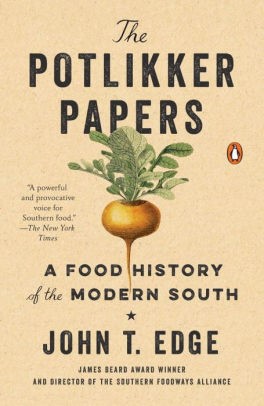
Some of the books and authors featured  at the Savannah Book Festival 2018:


Wednesday, April 12, 2017

Book Recommendations from NCHE 2017

By Jeff Burns

I recently had the opportunity to attend the National Council for History Education’s annual conference held in Atlanta. Whenever a group of historians and/or history teachers meet, books, old and new, are bound to be discussed.  Here’s a list of books that were featured in sessions or by exhibitors, in no particular order.


The Snipesville Chronicles is a series of time travel books aimed at young readers (but also enjoyed by adults) written by Annette Laing, a purveyor of non-boring history. http://www.annettelaing.com/


Drum Taps, a collection of poem about the Civil War by Walt Whitman


Edward Larson was one of the keynote speakers.  He’s written several books about science and technology in history and American history including the Pulitzer-winning Summer for the Gods, about the Scopes Monkey Trial.  Other books include An Empire of Ice, A Magnificent Catastrophe, Evolution’s Workshop, and his latest, The Return of George Washington.


March is the autobiography of civil rights movement figure John Lewis, in a graphic novel trilogy.


All Quiet on the Western Front is the classic World War I novel by Erich Maria Remarque.


Another keynoter was Bruce Lesh, the author of “Why Won’t You Just Tell Us the Answer?”: Teaching Historical Thinking in Grades 7-12.


Fire in a Canebrake: the Last Mass Lynching in America by Laura Wexler tells the story of the murders of two black couples in 1946. Considered the last lynching in Georgia, no one has ever been prosecuted for the crime.


The final keynoter was Micki McElya, the author of The Politics of Mourning: Death and Honor in Arlington National Cemetery and Clinging to Mammy: The Faithful Slave in Twentieth Century America.


Screening a Lynching: The Leo Frank Case on Film and Television by Matthew Bernstein


Monday, February 15, 2016

Truth Is Stranger Than Fiction

By Jeff Burns

Every good history teacher (and student) knows the old adage is true:  Truth is stranger than fiction. You can’t make this stuff up.  Reading history introduces you to new characters and plots that the greatest novelists and moviemakers couldn’t create without readers and viewers complaining about their implausibility. Are you looking for some stories too good to be true?  Try these. 

 
Clarence King was one of the most accomplished and famous scientists in America in the late 19th century, the first director of the United States Geological Survey. He also traveled in very exclusive circles:  academics like historian Henry Adams, politicians like Theodore Roosevelt, and historical figures like Secretary of State John Hay.  Among his friends and reporters, he was known as an adventurer, a raconteur, and a lifelong bachelor, who was at home in the field or hobnobbing with the members of high society, a luminary of the Gilded Age.  What none of them knew was that King was Passing Strange (Martha Sandweiss, author).  King pretended to be a black man, married a woman who was born a slave in Georgia, and set up her and their children in a fairly comfortable, if unorthodox, existence, explaining his long absences as work-related. Only as he was dying of tuberculosis did he confess the whole deception to his best friend and his wife.  It is an incredibly fascinating story that ultimately leaves the reader with as many questions as answers.  Sandweiss also educates the reader about the truths and perceptions of race at the time. (NPR story from 2010: http://www.npr.org/templates/story/story.php?storyId=129250977 )


You might know that Wonder Woman was one of the earliest comic book superheroes, first appearing in 1941, just a few years after Superman and Batman. However, you probably don’t know The Strange History of Wonder Woman (by Jill Lepore).  Not only was Wonder Woman’s creator, William Moulton Marston, the inventor of one of the earliest lie detector tests, but he also lived in a  plural marriage with two women at the same time, fathering children by both.  One of his two wives was the niece of women’s health and birth control activist Margaret Sanger and enjoyed bondage in the bedroom.  See some inspiration for Wonder Woman there?  Wonder Woman is very much the product of the suffrage movement; Marston’s mother and grandmother were dedicated feminists.  Marston’s unorthodox upbringing and family life shaped Wonder Woman into a feminist icon, decades ahead of her time.


If you’ve read other works by Erik Larson, you know that he is a master of conflating seemingly unrelated invents into masterful storytelling.  Thunderstruck  is no different.  The main story is the story of Guglielmo Marconi and his invention of wireless telegraphy, radio.  The secondary story is of a man and his wife in London and her mysterious disappearance.  Either story would make a great novel or movie, but Larson deftly brings them together, making the case that the couple’s story actually proved the feasibility of Marconi’s invention.


Looking for a little more science?  Try Mario Livio’s Brilliant Blunders: From Darwin to Einstein - Colossal Mistakes by Great Scientists That Changed Our Understanding of Life and the Universe.  Livio writes about 5 great scientists, Charles Darwin, William Thomson (Lord Kelvin), Linus Pauling, Fred Hoyle, and Albert Einstein, and their work.  However, instead of focusing on their pioneering achievements, he tells the stories of their shortcomings and failures and how these flaws actually advanced science.  Along the way, Livio dispels some commonly held misconceptions.


Wednesday, July 29, 2015

The Oregon Trail: A New American Journey by Rinker Buck

By Margaret Duncan, Ed.D.

As a teacher, I have attempted to engage students in learning about the Oregon Trail in a variety of ways, including playing the Oregon Trail video game.  So, I was genuinely excited to read about Rinker Buck’s journey to travel the epic trail.  I found the book to be a quick and easy read that tells the story of Buck and his brother Nick, and Nick’s Jack Russell terrier, Olive Oyl making a modern day crossing of the Oregon Trail.

As a reader, I was in awe of Buck’s attempt to travel the length of the Oregon Trail the old-fashioned way—in a covered wagon with a team of mules.  Such a journey had not been attempted in more than a century.  The fact that so much of the trail is still accessible was quite the revelation.  As an East Coaster, many of our original trails and pioneer roads are long gone, replaced by modern roads, cities and suburban sprawl.

Buck gives an overview of the Oregon Trail, which spans two thousand miles and crosses six states from Missouri to the Pacific coast. Once Buck sets up the history of the trail, he then begins the narrative of the crossing. Buck and his brother set out from St. Joseph, Missouri, to travel to Baker City, Oregon, a journey that would last four months.

The book can be broken down into three distinct parts, a journal of the trip, an all-around history of the trail, and the relationship Buck had with his father.  As a reader, I most enjoyed the journal and historical aspects of the book.  Believe me, you will have a good idea of what it takes to change a wagon wheel or how precious water can truly be.  In the beginning of the book, Buck talks about wanting to do the crossing alone.  However, as the book unfolds, it is hard to imagine this journey being possible without the aid of his brother Nick.  Indeed, the banter between the two is quite fun. 

I would highly recommend this book. It is very entertaining, as well as educational. The reader will be transported to an earlier time and a chance to “Go West!” Plus, you will learn more about what many of the Great Pioneers had to endure to make such an arduous journey. If you are like me and love the idea of taking a great road trip, I would enthusiastically recommend picking up this book.  It is definitely worth a read!

Tuesday, April 28, 2015

Missions Possible and Impossible

By Jeff Burns

I just completed an interesting historical novel by well-known Japanese author Shusako Endo, Silence, set in 17th century Japan.  It is the story of a Portuguese Roman Catholic missionary determined to minister to the once-burgeoning Christian population in Japan, threatened by a period of harsh oppression which had as its goal the elimination of Christianity, Which was deemed a threat to the social and political order, or as the main antagonist said “a seedling which cannot grow in the swamp that is Japan.”. 

The priest, Sebastian Rodrigues, and his companion, Francis Garrpe, embark on an idealistic journey to minister to the Japanese flock despite the stories of torture and execution subjected upon previous Catholic missionaries.  He finds his journey paralleling the life and passion of Christ, complete with his very own Japanese Judas Iscariot.  In the process, he must deal with serious questions about his own faith, the righteousness of his mission, and God’s perceived silence in response to the immense suffering of the faithful.  It’s a fascinating novel, a bit slow-moving at times but maybe that allows for the proper amount of contemplation, but the reader learns a lot about the culture and history of Japan.

No matter how one feels about religion or the Roman Catholic Church I particular, there is no doubt that the Church’s missionary efforts around the world, spearheaded by the Jesuits,  have shaped world history in many ways, both good and bad.  There are a number of novels and films that have explored that theme.


Silence immediately reminded me of James Clavell’s epic novel Shogun, a book I read in high school when it was made into one of my favorite television miniseries of all time.   It’s also set in the 16th century, just before the oppression against Christians, when Portuguese, Spanish, Dutch, and English commercial interests vied for control of Japan,  economically and religiously.  In this work, the protagonist is an English merchant sailor who becomes involved in Japanese court intrigue, and the Catholic missionaries are portrayed as the antagonists, enemies of the English and Dutch Protestants.

The Mission  is a 1986 film set in 1750s South America.  It is not based on a single novel but historical facts surrounding the Treaty of Madrid in 1750 in which Portugal and Spain exchanged territory in modern Paraguay and on The Lost Cities of Paraguay, a collection of stories by C.J. McNaspy.   It’s a sprawling big screen adventure  that follows Spanish Jesuit priest Father Gabriel in his attempt to establish a mission.
 

The Black Robe by Brian Moore is set in New France, North America in the 18th century and was also made into a film.  Father LaForgue, another young idealistic zealot, embarks on a mission to Christianize a group of Hurons.  He is immersed in the strange and savage world of New France and finds his breaking points, both as man and as priest, challenged.

These are great stories of history, adventure, and faith, all make for fascinating reading and/or viewing.
           

Tuesday, January 20, 2015

More Jungle Books

By Jeff Burns

If you’re like me and fantasize about exploring the remotest rain forests and interacting with indigenous peoples, but realize that you’re better suited for reading about it, here are some more books about wild jungles that might interest you.

In 1961, Michael Rockefeller of THE Rockefeller family, son of New York Governor  and Vice-President Nelson Rockefeller and grandson of John D. Rockefeller,  disappeared without a trace in New Guinea while on a trip to the most remote areas to collect primitive art.  In Savage Harvest: A Tale of Cannibals, Colonialism, and Michael Rockefeller's Tragic Quest for Primitive Art, Carl Hoffman makes his own journey 50 years later to try to figure out what happened.  While the more or less “official” story was that Rockefeller probably drowned while swimming for help after his boat capsized, there have always been rumors that perhaps he was murdered.  The natives he met and dealt with practiced traditional ritualized warfare, headhunting, and cannibalism well into the 1950s, and despite Dutch (The Netherlands controlled the area at the time.) protestations to the contrary, maybe even long beyond.  Hoffman explains why the Dutch were keen to have the death labeled accidental, and he presents a thorough examination of all the government and media accounts of the disappearance.  He also retraces Rockefeller’s travels and meets the sons of the men who may have been involved with Rockefeller’s last days.  Hoffman immersed himself in the Asmat (the tribe involved) culture and brings it to life for the reader while he solves the mystery and proves pretty conclusively what happened.


Mother of God: An Extraordinary Journey into the Uncharted Tributaries of the Western Amazon is by Paul Rosolie, a twentysomething naturalist and adventurer who made his first trip into the Amazon jungle at 18.  You may have heard of him  as the subject of a Discovery TV ratings stunt that aired recently called Eaten Alive, in which he was to have been eaten by a giant anaconda, supposedly to call attention to the plight of the anacondas and the threatened Amazon rainforest.  The show was widely condemned, before and after airing as misleading, fraudulent, tawdry, and other things, and unfortunately it colored my perception of this book as well.  If I had never heard of the tv show, I would have been very satisfied with the book.  It is a thrilling adventure, and it paints a vivid picture of the flora and fauna of Amazonia, and the environmental destruction happening there every day.  However, the fact that Rosolie was involved with the sensationalistic Eaten Alive, leaves a bad taste in my mouth (pun intended).  If he is a part of this, I thought, might he not have used a little creative license in the book to make some elements more exciting?  It was a good read, all things considered, and I would recommend it (now that I’ve planted the seeds of doubt in your mind).  Judge for yourself.

I haven’t yet read Walking the Amazon: 860 Days. One Step at a Time by Ed Stafford, published in 2012, but it’s going on my list.  In 2008, Stafford set out to walk the entire length of the Amazon, a 4,000 mile journey, from Peru to Brazil.

Also on my “to-read” list is Buddy Levy’s River of Darkness: Francisco Orellana's Legendary Voyage of Death and Discovery Down the Amazon in which he examines the first Spanish conquistadors’ explorations of the Amazon and exciting recent archaeological discoveries that are challenging long held understandings of the history of the region and of American native peoples in general. 
 

Sunday, December 28, 2014

Avast Mateys! Books About Pirates

By Jeff Burns

The Golden Age of Piracy has long been romanticized in popular culture, from at least the 18th century through the present.  Tales of real characters like Blackbeard, Captain Kidd, and Calico Jack have become blurred with fictional characters of Long John Silver, Jack Sparrow, and Captain Blood.  Here are three recent works that attempt to set the story straight.


Colin Woodard’s  The Republic of Pirates: Being the True and Surprising Story of the Caribbean Pirates and the Man Who Brought Them Down  is specifically about the Golden Age, roughly 1715 to 1725 when pirates were so powerful that one group established a literal republic of pirates, untouched by British authorities until one man, Woodes Rogers, determines to break their hold.  There are a lot of flamboyant characters, including Blackbeard, and a lot of information about the average pirate, who was anything but average.  Pirates were ne’er-do-wells, criminals, runaway slaves, hustlers – from all walks of life, including some forced into piracy.  This book is a fast-paced history of them all.


Under the Black Flag: The Romance and the Reality of Life Among the Pirates by David Cordingly is billed as a “revisionist history,” written by the former director of the U.K.’s National Maritime Museum. Like Woodard, he refutes many myths created by Hollywood, like “walking the plank” for example, and portrays the true, often violent life of the pirate.  He also spends time examining the popular culture myth of Pirates, the how and why of the romanticization. 

At the Point of a Cutlass: The Pirate Capture, Bold Escape, and Lonely Exile of Philip Ashton by Gregory Flemming is the story of one particular pirate, Phillip Ashton.  Ashton was one of those unlucky men who was forced into service on board the pirate ship that seized his own.  He was captured at age 19 off the coast of Nova Scotia by one of the most bloodthirsty pirates, Edward Low.  He survived nine months as a pirate before escaping on a deserted island in Caribbean, where he survived another year before rescue.  He wrote a memoir of his experiences, and Flemming deftly weaves his personal narrative with trial records, logbooks, and lots of other archived sources.  It is not only an exciting and interesting account of the life of pirates, but also a riveting story of one man’s survival.

Friday, July 18, 2014

A Sampling of Classics Illustrated Sci-Fi Comics

By Margaret Duncan, Ed.D.

I fully admit I am an adult that still gets excited to go into a comic book shop.  I am also a parent who has used children’s books, as well as comics to introduce reading to my girls. I have also used comics in my classroom to help get students more excited about a certain time period.  Classics Illustrated was a series of comics that ran for thirty years (1941-1971) and would adapt well known novels into comic book form.  Think of it as an earlier version of CliffNotes with pictures for students.  Many of the Classics Illustrated comics hold up well, they were beautifully adapted and illustrated.  For my girls, they enjoy the comics as much, and in some cases more than the original book. So, let us take a trip down memory lane with some classic sci-fi adapted novels from H.G. Wells and Jules Verne. 

H.G. Wells
You can read H.G. Wells classics like The Time Machine (No. 133) and The Frist Men on the Moon (No. 144). The Time Machine (originally published in 1895) is about an English scientist and the time machine he creates and uses. He uses his machine to travel to 802,701, where he meets the Eloi and the Morlocks.  Unlike the original novel, in the comic adaption the Time Traveller is not set in Victorian England but instead contemporary 1950s.  Also, the bonus feature in the comic is part of a 12 part series on The Story of Great Britain. 

The First Men in the Moon (originally published in 1901) is about a journey to the Moon by a businessman, Mr. Bedford, and an eccentric scientist, Mr. Cavor. Long before we would actually go the moon, Wells let us know about things like weightlessness, and that Moon travel was possible.  Unfortunately, he was wrong about finding a civilization of insect-like creatures called the Selenites.  Sadly, there is no bonus feature in this comic.  However, there is extra info on The Mysterious Moon and Celestial Streaks (Comets).

Jules Verne
Some of the great Jules Verne adaptions are Around the World in 80 Days (No. 69), Off on a Comet (No. 149), and Master of the World (No. 163). Around the World in Eighty Days (first published in 1873) is the story of Phileas Fogg and his French valet Passepartout as they attempt to circumnavigate the world in 80 days thanks to a £20,000 bet. The extras in the comics are about Der Meistersinger by Richard Wagner, Smoky The Quick Thinking Dog and Thomas Wedgwood, the inventor of the camera.

Off on a Comet (originally published in 1877) is about the comet Gallia.  When it collides with Earth it carries a part of it off including 36 people. As they travel on the comet, they are able to explore the solar system and eventually return back to the Earth. Extras in the comic are about Mercury and Jupiter, and one on the constellations.

Master of the World (first published in 1904) is a sequel to Robur the Conqueror. In the comic, Robur has perfected his new invention, the Terror. It is a vehicle that can be many things, a speedboat, submarine, automobile, or aircraft. It is up to John Strock to find him and the Terror. The extras in the comic are Who Knows?, a short story, and The Bride comes to Yellow Sky.  There is also a short comic about Socrates.

One thing I really like about Classics Illustrated is that each contain a bio on the author.  It is really nice that the reader can read the novel in comic/graphic form and then learn all about the person who wrote it.  Another great thing is that each story also ends with the same challenge: “Now that you have read the Classics Illustrated edition, don’t miss the added enjoyment of reading the original, obtainable at your school or public library.”

These are just a few sci-fi classics, what novel would you like to read as a comic book? 
 

Thursday, February 20, 2014

Seascape, Sandscape, Lunarscape: Four 19th Century Adventures

By Jeff Burns

            In the 19th century, readers devoured thrilling tales of adventure by and about men (and a few women) exploring the unknown.  As Americans moved westward, carving out new lives for themselves and their families, others were exploring exotic locales and facing unimaginable dangers.  Some lived to write or tell their stories, sometimes becoming celebrities and inspiring other storytellers.
            Off the coast of Chile, in 1821 a whaling ship spotted a boat on the open sea, occupied by two haggard  and deranged men, surrounded by, and chewing on , human bones.  They were survivors of one of the most well-known maritime disasters of the 1800s, the sinking of a Nantucket whaling ship by a sperm whale.  Three boats containing a total of twenty men survived the sinking; only eight survived the two thousand mile long struggle.   The incident inspired Herman Melville to write Moby Dick.

In the Heart of the Sea: The Tragedy of the Whaleship Essex  by Nathaniel Philbrick is the story of this incident, unparalleled in the history of whaling.  Philbrick, a maritime historian, and a sailor himself,  provides a detailed account of the Nantucket whaling industry and a description of shipboard life.  The book is extensively researched and footnote, but Philbrick’s writing style makes it a page-turner. (Ron Howard-directed movie version scheduled for 2015 release)

Skeletons on the Zahara: A True Story of Survival by Dean King recounts the experiences of twelve American sailors who were shipwrecked off the coast of Africa in 1815, captured by desert nomads, sold into slavery, and subjected to a hellish two-month journey through the bone-dry heart of the Sahara.  King did exhaustive research and even re-traced part of the desert journey the men were forced to take.  The story of survival is every bit as thrilling as it was when it was first published in the 1800s, when it was read and admired by Henry David Thoreau, James Fenimore Cooper, and Abraham Lincoln.  (History Channel docudrama 2006)

Sea.  Desert.  What locale could be more exotic in the 1800s than the moon?  We know the zenith of the newspaper industry in America was near the turn of the 20th century, when William Randolph Hearst and Joseph Pulitzer’s newspapers tried to out-sensationalize each other for the public’s pennies, in the era of the newsies.  However competition was fierce in the early 1800s as well. 

The Sun and the Moon: The Remarkable True Account of Hoaxers, Showmen, Dueling Journalists, and Lunar Man-Bats in Nineteenth Century New York by Matthew Goodman brings to life that intense cutthroat atmosphere that led to one of the greatest hoaxes in American history.  On August 26, 1835, a fledgling newspaper called the Sun brought to New York the first accounts of remarkable lunar discoveries. A series of six articles reported the existence of life on the moon—including unicorns, beavers that walked on their hind legs, and four-foot-tall flying man-bats. In a matter of weeks it was the most broadly circulated newspaper story of the era, and the Sun, a working-class upstart, became the most widely read paper in the world.

 Goodman also wrote Eighty Days: Nellie Bly and Elizabeth Bisland's History-Making Race Around the World.  Inspired by the Jules Verne novel, Around the World in Eighty Days, two pioneering female muckraking reporters, Bly and Bisland, attempted to complete the feat, and beat each other doing it.  While their names are not as well-known today (Bly more known than Bisland), the literate world was riveted by their adventures.

Monday, January 6, 2014

The Westerns: Adventure and History in Books

By Jeff Burns

            In the mood for a story about the West?  Let me recommend a few good books that you may not have heard about.

First, the novels:  One Thousand White Women: The Journals of May Dodd and The Wild Girl: The Notebooks of Ned Giles, 1932, both by Jim Fergus.  They are both fictionalized accounts of journals written by very interesting people in unique settings.

            Imagine a secret treaty between the US and the Cheyenne nation in 1875.  The Cheyenne chief demands that, in order to expedite the assimilation of his people into a peaceful coexistence with whites, 1000 white women must be sent west to become wives of Cheyenne warriors.  The government rounds up prostitutes, criminals, and asylum patients, women who wouldn’t be missed by many.  One of the women selected is May Dodd, committed to an asylum by her parents because she has an “unnatural” sexual appetite.  (At the time, “unnatural” meant that a woman enjoyed sex, and some women were medically treated and even institutionalized for the malady.)  May tells her own story and the stories of several other women as they adjust, or not, to Cheyenne life, including a former slave who becomes a great warrior on her own.

            In The Wild Girl, a rancher’s young son is kidnapped by a small renegade band of Apaches.  A large expedition is mounted to rescue him.   Joining a motley crew of millionaire playboys, cowboys, and soldiers in this last great Indian “adventure” is a young photographer named Ned Giles who forms an unusual relationship with the wild girl of the title, a captured member of the Apache band used by the expedition to find the renegades and perhaps to be traded for the boy.
            One of my favorite John Wayne movies is “The Searchers,” in which the Duke is searching for his niece, stolen by the Comanches.  The movie was inspired by and loosely based on the real life story Cynthia Ann Parker, a girl stolen by Comanches.    The Comanches dominated a huge territory in the southern plains, terrorizing Anglos, Mexicans, and other Indians throughout Texas, Oklahoma and northern Mexico for many years.  Cynthia Parker’s son, Quannah Parker, became the most famous Comanche chief, leading at the height of the tribe’s power.  S.C. Gwynne chronicles this history in Empire of the Summer Moon: Quanah Parker and the Rise and Fall of the Comanches, the Most Powerful Indian Tribe in American History.

            After reading Empire, I was led to read The Texas Rangers: Wearing the Cinco Peso, 1821-1900 by Mike Cox. The Texas Rangers were formed chiefly to fight the Comanches before becoming the chief law enforcers of the state.   (Wayne’s character in “The Searchers” is a Ranger.)  It took a particular kind of man to be a Texas Ranger, and Cox tells their story well in this very interesting book.
            We all know about the Trail of Tears, but how much do you know about the Long walk of the Navajo?  Blood and Thunder: The Epic Story of Kit Carson and the Conquest of the American West by Hampton Sides tells the story of Kit Carson’s brutal conquest of the powerful Navajo nation and their forced relocation to a barren reservation.
            If you’ve ever seen any photographs of Indians, you are probably familiar with the work of Edward Curtis, probably the most famous Indian photographer who desperately tried to capture the history of the Native Americans before they all disappeared in the early 20thcentury.  Timothy Egan wrote a fascinating biography of the man and account of his life’s work in Short Nights of the Shadow Catcher: The Epic Life and Immortal Photographs of Edward Curtis.
            Finally, here are two novelists that you can’t go wrong with:  Larry McMurtry, the author of Lonesome Dove, and Tony Hillerman, the author of the series of mysteries featuring Navajo policeman, Joe Leaphorn.

            So, saddle up and head west, Pilgrim!


Sunday, December 29, 2013

Amateur Travel History: Horwitz and Vowell

By Jeff Burns

Winter’s here, and many people kind of slow down and travel less, but you can still enjoy some great travel history.  I recommend a couple of authors who are amateur historians.  They don’t have degrees in history and spend their days in archives and libraries doing research.  Instead, they travel and talk to people, and then they share their experiences with us in a way that’s both informative and entertaining.

First, there’s Tony Horwitz.  Horwitz is a Pulitzer-prize winning journalist by profession who spent years covering international events and conflicts before becoming an author.  He does his research and then sets out on his journey, but his gift is in drawing out detailed characterizations of the people he meets on the way.  He’s also very witty and intertwines his own adventures and misadventures with the adventures of his subject, while making connections between past and present. 

Here are his books:

Baghdad Without a Mapis his journey through Kuwait, Saudi Arabia, and Iraq immediately after the Gulf war.

In Blue Latitudes, he follows the voyages of Captain James Cook, the British discoverer of Australia, New Zealand, and Hawaii.

A Voyage Long and Strangeis all about the discovery of the New World, from Columbus to the conquistadors who forged New Spain in Central and South America.

In Confederates in the Attic, Horwitz turns his attention to the Civil War, but he approaches the story from a unique perspective.  The story is really about the Civil War re-enactors that he camps with and lives with.
19th Century Cabin
His most recent book, Midnight Rising, is perhaps his most historical work.  It’s the story of abolitionist John Brown and his 1859 raid on the Harper’s Ferry federal arsenal, a pivotal event in the march to the Civil War.

My second amateur historian recommendation is Sarah Vowell.  Vowell is an essayist and social commentator.  You may have heard her commentaries on NPR’s This American Life  or may have seen her occasional talk show appearances.  Or you may know her voice as that of the teenage daughter Violet in the movie The Incredibles.   She’s written several nonfiction books on American history and culture.  She doesn’t pretend to be an unbiased journalist, and her point of view comes across clearly in her work.  However, the history is spot on;  just be aware that you’re getting her interpretation of it.  Her interpretation can be hilarious, insightful, cynical, and enlightening.  At any rate, you will be entertained.

Her books:

The Wordy Shipmatesis about the Pilgrims on the Mayflower and the first settlements in colonial Massachusetts, and how misleading our image of them is.

The  Partly Cloudy Patriot  addresses a wide range of topics from Rosa Parks to Gettysburg Address to Bill Clinton and many more.

Assassination Vacationis about Presidential assassins and would-be assasins.  Vowell makes a cross-country trip to see for herself sites related to the events.

Take the Cannoliis another collection of essays on a variety of topics, including the Trail of Tears which had a direct impact on her own family.

Trail of Tears Map
Her most recent work, Unfamiliar Fishes, tackles American imperialism, specifically the annexation of Hawaii. 

Sunday, November 17, 2013

Jungle Books

By Jeff Burns

As a kid, I was a huge fan of Tarzan movies, especially the ones from the 30s starring Johnny Weismuller.  Heck, anything with jungle and natives and lost cities caught my attention.  The idea of exploring the unknown and initiating contact with people untainted by knowledge of the outside world excited me, and I dreamed of being an anthropologist on one of those expeditions.  Too bad jungles usually come with extreme heat and nasty bugs and other bitey thingies.

In junior high and high school, I read all of the Tarzan books by Edgar Rice Burroughs, but, let’s be honest, there’s not much history there, unless you read them for the subtext of the time.  They reflect the racism and imperialism of the time they were written, and Burroughs’ own personal racism and deep involvement in the eugenics movement that was very popular at the time, and in fact led directly to the Holocaust.

I thought I’d recommend some more historical titles that I’ve enjoyed recently.

The River of Doubt:  Theodore Roosevelt’s Darkest Journey by Candice Millard tells the story of TR’s South American expedition following his presidency.  We know what a conservationist and outdoorsman he was, but did you know he nearly died in the rainforest in the process of finding a previously unknown tributary that was named for him?  TR dealt with the elements, Indian attacks, and deceit within his own expedition, and he very nearly failed to return.

Also set in the Amazon, The Lost City of Z by David Grann has all the ingredients of a great jungle story.  In fact, Brad Pitt is currently producing a movie version starring Benedict Cumberbatch as the eccentric British explorer, Percy Fawcett, leading an expedition into the Amazon rainforest to prove his crackpot theory that there were once large, advanced cities and civilizations there.  From the earliest accounts of Spanish conquistadors and priests, there are stories of women warrior tribes (hence the name Amazon) and great cities that gave rise to the legends of El Dorado and Cibola.  Not only did Fawcett’s entire expedition disappear, but so did several rescue expeditions launched in the 1920s and 1930s.  And, almost a hundred years later, it turns out that his idea might not have been so crackpot after all.  In the past decade, archaeologists have discovered bits of evidence that suggest that cities may actually have existed hundreds of years ago.

Fast forward to the present day, and you have Scott Wallace’s The Unconquered:  In Search of the Amazon’s Last Uncontacted Tribes.  Wallace accompanies an expedition led by Sydney Possuelo as he searches for the “Arrow People”, endangered even though they’ve never been in contact with non-Indians.  Possuelo has devoted his life to protecting Brazil’s indigenous population and created the agency that deals with them.  Wallace ably chronicles the dangers of the journey, but he also describes for the reader the 21stcentury problems threatening the existence of these stone age people, from environmental changes, to criminal trespassers (including terrorists, drug dealers, and slavers), to arguments within the government about how to best serve the Indians. 

Jumping to the continent of Africa, Between Man and Beast by Monte Reel is about the Europeans who  “discovered” gorillas and introduced them to Europeans.  This discovery happened in the midst of the debate raging in Britain over Darwin’s theory of evolution.  The book has many layers; it’s not just the story of the jungle expedition.  It’s also the story of the cultural firestorm that Darwin’s theory ignited, intense personal and professional rivalry between scientists and explorers, and the racism, ethnocentrism, and imperialism of the late 19th century.

 Tim Butcher’s Blood River is set in modern day Africa as he attempts to follow the Congo River as Stanley did in his search for Livingstone.  He finds a country racked by poverty, corruption, and civil war.  In its own way, Butcher’s journey is just as thrilling as Stanley’s, and he paints a vivid, and often depressing, picture of Africa.  Americans generally know very little about affairs and events around the world, maybe least of all Africa.  Blood River is interesting and educational.

Coincidentally, as I was finishing up this blog, I became aware of a new book by photographer Jimmy Nelson called Before They Pass Away.  He spent the last several years traveling the world photographing many of its  last aboriginal societies.  The book costs $135, so I haven’t seen it yet, but there’s an extensive website for it :   http://www.beforethey.com/

If you like stories of intrepid, sometimes crazy, explorers, jungle dangers, and lost civilizations, I hope maybe I’ve given you some ideas here.