Showing posts with label #JeffBurns.#books. Show all posts

Sunday, July 15, 2018

Three Views of the Gilded Age

By Jeff Burns

I’ve recently read three interesting books of the late 19th and early 20th centuries, the Gilded Age or the late Victorian period. Each was very interesting in its own way, and each focused on a different aspect of the period.


The Wilderness of Ruin by Roseanne Montillo, is the story of Jesse Pomeroy, a fourteen-year old Boston boy, convicted of brutal attacks and murders of local children in the 1870s.  The story behind the crimes and the criminal himself is very interesting, but that’s not the entire book.  Montillo paints a very vivid and detailed picture of Boston in the 1870s, the lives of several of Boston’s leading citizens including Oliver Wendell Holmes and Herman Melville, and the penal system of the time. 

Houdini, Tarzan, and the Perfect Man is an original way of looking at the time that hadn’t occurred to me.  John Kasson, the author, selects three men - escape king Harry Houdini, the first professional bodybuilder Eugene Sandow, and  king of the jungle Tarzan – to explore how the modern age affected white men in America and Europe and their perceptions of what it meant to be the perfect physical specimen, the perfect physique, the “perfect man.”  He deftly relates these changes in perception to racism and imperialism in a unique way. 

The Last Days of Night is one of the best historical novels I’ve read in a while.  It’s about the Current War between Thomas Edison and George Westinghouse, a war to determine which electrical system, AC or DC, would power the world. Throw in real characters like Nikola Tesla, J. P. Morgan, and opera singer Agnes Huntington, and you’ve got a very exciting story.  Moore also starts each chapter with a quotes from scientists, engineers, inventors, or businessmen.  Most of the quotes are from Bill Gates and Steve Jobs.  Their use really encourages the reader to make comparisons among the men of the late 19th century and early 21st centuries. The book  whetted my appetite for biographies of Tesla and Edison, especially Tesla.

Tuesday, August 25, 2015

Tears and Laughs: TV Comedy Legends

By Jeff Burns

I’m a fan of classic TV.  I’ve seen just about every show from TV’s golden age, the 50s when most televisions in the country were tuned in to the Jack Benny Show, I Love Lucy, or the George Burns and Gracie Allen Show.  When I come across these shows, I’ll usually park and watch for a while.  This summer, I discovered some books about comedy legends (and most of them were free through Kindle Unlimited, an added bonus). 

First up was Laughs, Luck...and Lucy: How I Came to Create the Most Popular Sitcom of All Time by Jess Oppenheimer, the producer, director, and head writer of arguably the greatest sitcom of all time, I Love Lucy.  In his autobiography, Oppenheimer details his early days in radio and how he came to be involved with Lucille Ball and Desi Arnaz. It’s a real behind the scenes look at them and their show which transformed how television was made forever.

 
Next was Raised Eyebrows - My Years Inside Groucho's House, originally published by Steve Soliar in the 1990s but updated and published again in 2011.  Stoliar tells an incredible story about his three years as the personal secretary of Groucho Marx.   Through an unbelievable chain of events, Stoliar got the job as a 19 year old and began work in Marx’s home in Marx’s last three years of life.  Stoliar was witness to moments of legendary wit as well as to the sad decline of the comedy legend who was unfortunately manipulated, some say abused, by his mentally unstable companion.  There are great stories about Marx when he was at his most vulnerable, really humanizing him, and Stoliar was involved with many other Hollywood legends in the process of his work. It’s a real page-turner.

I Stooged to Conquer: The Autobiography of the Leader of the Three Stooges written by Moe Howard is one of the older titles I read.  The book does not go into great depth about the stooges’ personal lives, but it is a thorough recounting of their professional lives.  Moe’s journey from a school dropout who started acting in as a child in silent movies, his vaudeville acts with brother Shemp and Larry Fine, and all the permutations of the stooges that followed.


Two other books are on my list to read, but I haven’t gotten to them yet.  Moe Howard’s daughter, Joan Howard Maurer, wrote a biography of her uncle Curly Howard, AKA Jerome Horowitz, maybe the most beloved stooge. Curly’s life was much more tragic than Moe’s, full of failed marriages, problems with alcohol and insecurity, and ending with a tragic early death.

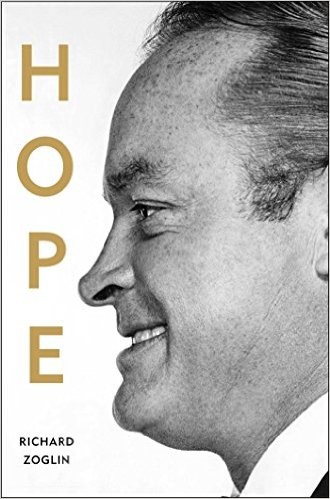
Last year, Richard Zoglin published Hope: Entertainer of the Century, billed as the most definitive biography of Bob Hope.  Zoglin was dismayed that Hope didn’t seem to be getting the recognition that he deserved and set out to correct it.  When I read it, I look forward to comparing this version of Bob Hope to the one described in several vignettes in Stoliar and Oppenheimer’s books.


Tuesday, April 14, 2015

Author Spotlight: Doris Kearns Goodwin

By Jeff Burns

Doris Kearns Goodwin has become one of the go-to presidential historians.  You can see her as a talking head in many documentaries and on news shows whenever an historical presidential perspective is called for.  If you’re looking for a thorough – sometimes too thorough – presidential biography, you should consider her work.


Her first major work, now out of print, was about a subject that was very close to her.  Lyndon Johnson and the American Dream presents a very intimate portrait of Johnson.  Goodwin actually became a close confidante of LBJ when she went to work as a White House staffer fresh out of college.  She followed that up with The Fitzgeralds and the Kennedys.

Team of Rivals is familiar to many people since it was the basis of the Spielberg film Lincoln.  While it’s not strictly a biography of Abraham Lincoln, it’s more of a study- a very detailed study – of Lincoln the politician.  As homespun and folksy as Lincoln was, he was perhaps the most politically gifted and astute man ever to be president.  His genius  and greatness is reflected in the men that he chose to serve as his cabinet, men who not only weren’t fans but who also were in many ways his biggest rivals and critics.  From the book, readers learn a lot about these men and about vigorous debate with the cabinet and Congress leading to the Emancipation Proclamation.

Goodwin won the Pulitzer Prize for No Ordinary Time: Franklin & Eleanor Roosevelt: The Home Front in World War II. Individually, the Roosevelts are sure to rank near the top of any list of influential and important Americans, but, as a couple, they have few peers.  They may be the greatest power couple in American history, and people are fascinated not only by their accomplishments, but by the relationship itself.  Goodwin’s book takes the reader deep into that relationship while painting a vivid picture of World War II America.


The Bully Pulpit, her latest book, is in its own way the story of another power couple, Theodore Roosevelt and his protégé, successor, and eventual rival, William Howard Taft.  At nearly 1,000 pages, it’s a tome worthy of these two heavyweights (pun intended), strong biographies of both men and an insightful and detailed look at the powerful friendship and affection that they shared, until the election of 1912, when their rivalry became just as powerful.

Thursday, November 6, 2014

Four Daughters

By Jeff Burns

There seems to be a whole sub-genre of historical fiction out there that tells stories from the point of view of daughters, characters who can be both observers and participants in the action and historical events around them.  Here are some recommend options if you’d like to explore.

German author Oliver Potszch has written a series of novels that follow a Bavarian family in the 17th century, starting with The Hangman’s Daughter.  He embarked on writing the series after discovering that his own family, the Kuisls,  were renowned Bavarian executions.  Not only was execution a family business passed down from generation to generation, but the job involved much more than simply execution.  Executioners and their families were an ostracized, but important, element of society at the time.  They not only carried out executions, but many other punishments in those days when prison was not an option, and criminal offenders were tortured, flogged, and mutilated.  As part of their profession, executioners also were practiced in the art of healing and even a little alchemy.  The titular hangman is a veteran of the Thirty Years War that devastated the German states and has his own demons as a result.  He and his daughter, meanwhile find themselves involved in a series of murders that cause them to run afoul of civic and church officials.  While the hangman is the main character, his headstrong and challenging daughter always takes an active role in the investigations.  The books are exciting, fun to read mysteries, and their packed with historic detail.  I love the fact that the author always includes thorough notes in which he talks about the actual locations, events and people that inspired his work.  Subsequent titles include:  The Dark Monk, The Poisoned Pilgrim, and The Beggar King.

Linda Lafferty writes another 17th century tale, this time set in Bohemia, called The Bloodletter’s Daughter.  The title character also comes from a station in life deemed necessary but unseemly, and relegated to the lowest ranks of society.  Her father is not only the town bloodletter, the closest most people got to a trained physician in those days, but he also operated the town bathhouse.  Marketa, the daughter, finds herself the object of the deranged passion of a Hapsburg prince.  Another great murder mystery and thriller based on real life royal figures and a scandal that nearly toppled the dynasty.

From American history, there’s The Heretic’s Daughter by Kathleen Kent.  It is the story of the Salem Witch Trials, told from the point of view of sarah, the daughter of Martha Carrier, one of the first women to be accused and executed for witchcraft.  Kent herself is a 10th generation descendent of Martha Carrier.  It’s a detailed and complex tale of Puritan New England and the of the hysteria that accompanied the trials that led to hundreds of people being jailed and twenty being executed .  There’s one error in the book that got me, Giles Corey, the man pressed to death for refusing to confess, is called Miles, at least in the Kindle edition of the book. 

Moving into the nonfiction realm, there’s Galileo’s Daughter, by  Dava Sobel.  Ostensibly, a biography of Galileo’ daughter, whom he sequestered in  a cloistered nunnery , the book is really a great biography of Galileo, called by Albert Einstein the “father of modern science.”  Sister Maria Celeste’s life, and that of her father, is presented through 124 letters written to her father, in which they touch on a multitude of subjects, including the cloistered life, the Black Death,  his experiments, and of course his persecution by the Catholic Church for heresy. 

Tuesday, June 3, 2014

Reading about the Wrenching Pain of History

By Jeff Burns

History, despite its wrenching pain, cannot be unlived, but if faced with courage, need not be lived again. ---Maya Angelou

            Throughout the year in my US History classes, I tell lots of stories and include lots of unpleasantness as it arises.  My students often tell me that I ruin their day or dispel their childhood truths.  However, in January or early February, I usually get to the day in class that is the most depressing and silent day of the year, because I normally set aside a day to talk about lynchings and racial violence of the Jim Crow era.

            Why?  I was never exposed to any of this information in school, but I think it is a necessary part of the study of history to study the bad and the good, the depressing and the uplifting, and good history and good citizenship both demand the full story, warts and all.

            (Caveat:  I do teach mostly Advanced Placement and Honors students, juniors.  A teacher has to be aware of the maturity level and responsibility of their students.  My students are mature enough to take college level courses, hold jobs, and operate vehicles capable of mayhem and death.  They should be able to handle a major, if disturbing,  fact of  our country’s history.)

            However, I have to stress again that it can be a very painful experience, and it has to be managed well.  It’s not for every student or every teacher. My lesson suggests are on this Histocrats in the Classroom post.

  Whether you build a lesson around the topic or not, here are some books you may consider reading for background, but this list just barely scratches the surface:

Without Sanctuary: Lynching Photography in America by James Allen, et.al. is a collection of hundreds of lynching photographs taken across the country, mostly as postcards and souvenirs.  Many of the images and the descriptions I use come from this book.  The images are now part of a collection managed by Emory University.

At the Hands of Persons Unknown: The Lynching of Black America by Phillip Dray

The Way It Was in the South: The Black Experience in Georgia by Donald and Jonathan Grant is the only book length treatment of the scope of black history in a single state, encyclopedic in breadth.

The Burning: Massacre, Destruction, and the Tulsa Race Riot of 1921 by Tim Madigan is one of a number of books about specific race riots.

Like Judgment Day: The Ruin and Redemption of a Town Called Rosewood by Michael D’Orso.  The Rosewood Florida massacre was the subject of the movie Rosewood.

Trouble in Mind: Black Southerners in the Age of Jim Crow by Leon  Litwick

There’s also a lot of fiction about the subject, as well as poetry and works of art.  Georgia-born author Erskine Caldwell, who had already outraged most white Georgians for his portrayal of the Lester family in Tobacco Road, wrote Trouble in July.