Showing posts with label #chattingwiththehistocrats. Show all posts

Monday, May 23, 2022

Gangsters vs Nazis


    Prolific true-crime author Michael Benson has published a new book, Gangsters vs Nazis: How Jewish Mobsters Battled Nazis in Wartime America, that focuses on an area of American history that few Americans are familiar with. Many Americans probably know that there was a large anti-war movement in 1930s America. As Hitler consolidated power in Germany, violated the provisions of the Treaty of Versailles, and made conquests and threats in Europe, the "America First" movement attracted American celebrities and political figures like Charles Lindbergh, Helen Keller, John F. Kennedy, Gerald Ford, Lillian Gish, and Frank Lloyd Wright. Heads of major American corporations also supported the movement. They argued that European affairs were not America's concern and that we should not be duped again into fighting a war that wasn't ours and seeing American boys die in vain.

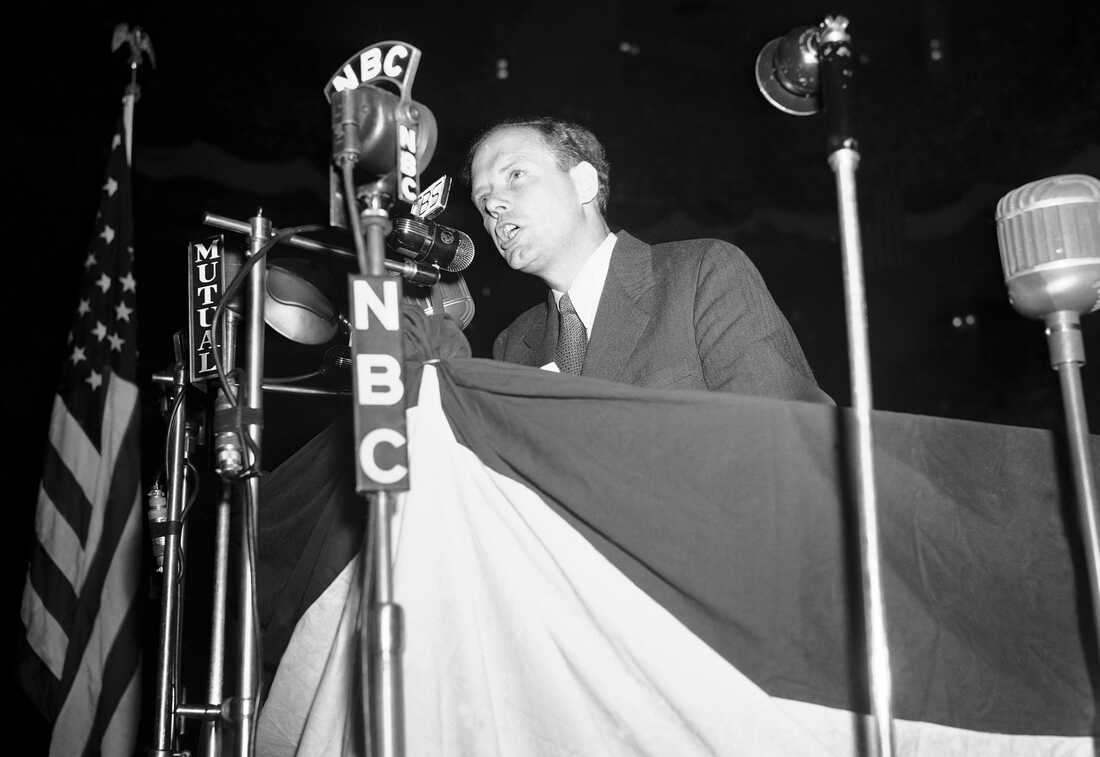
(Charles Lindbergh addressing an America First Rally)

    How many Americans realize that there were actually fascist, pro-Nazi organizations, mostly comprising German- Americans? Organizations like the German-American Bund (Brotherhood) and the Silver Legion claimed to have tens of thousands of members, although a few thousand active members was probably more accurate. They wore brown, black, or gray uniforms and swastika armbands to emulate the German Brownshirts and military uniforms. They paraded in the streets and held rallies, proudly displaying the Nazi German flag alongside the American flag and portraits of Hitler alongside portraits of George Washington. They performed the fascist salute and shouted "Heil, Hitler!" Some men even grew Hitler moustaches. They even ran at least 21 summer camps across the country to indoctrinate German-American boys and girls. 

                                                        (Bund rally at Madison Square Garden)
                (Bund leader Fritz Kuhn)

    A major tenet of the agenda of these groups was anti-Semitism. Unfortunately, that was (is?) not a foreign concept in America; Charles Lindbergh, America's greatest hero of the age, was extremely anti-Semitic, along with many in the America First movement. Father Charles Coughlin, a Roman Catholic priest with millions of regular listeners to his weekly radio broadcasts, also used his platform to blame Jews for the ills of the world. As American Jews learned of Nazi persecution of Jews in Germany and the creation of concentration camps and ghettoes and saw incidents of anti-Semitism in the U.S rise, some Jews decided it was time to take action.

 
(Judge Nathan Perlman and Rabbi Stephen Wise)

    New York Judge Nathan Perlman had an idea. He, sometimes with prominent Rabbi Stephen Wise, met with Jewish mob figures like Meyer Lansky and suggested that they use some of their muscle to harass the anti-Semites. Lanksy and others jumped on the idea, seeing it as their patriotic duty as Americans and as Jews. However, Rabbi Wise warned them that murder was off the table, dampening a little of their enthusiasm. Nevertheless, squads were assembled to keep track of Bund and fascist meetings, to infiltrate, and to inflict as much physical damage as possible - short of murder. Even after the US joined the war and the fascist organizations were disbanded, Jewish mobsters provided intelligence, surveillance, and security in the northern and midwestern states. Their assistance was valuable in thwarting German espionage and sabotage, especially in shipyards and factories.

     Gangsters vs Nazis was a great read, about a subject that I knew little about. As far as Hollywood is concerned, it seems, mobsters were predominantly Italian/Sicilian. In reality, there were large Irish, Jewish, and Italian crime organizations, sometimes clashing with each other, sometimes allying with each other in a common goal. For example, the Jewish mobsters mentioned in the book often worked with Italian crime bosses who opposed Mussolini even though Italy was a German ally. It's also very readable. Benson is no stodgy academic writing a thesis, he uses language fitting for the subject. I recommend this book to anyone interested in pre-WWII America or organized crime history.


Monday, October 25, 2021

Florida Man (And Woman) History, Part 4

     I am always on the lookout for books about Florida and its history in order to learn more about my new home state.  Here are my reviews of the three latest reads.


    The State You're in: Florida Men, Women, and Other Wildlife is the latest book by native Floridian and journalist, Craig Pittman, the author of Cat Tale  and Oh, Florida! ,among others. Pittman has collected fifty-one of the articles he's written over his thirty year career writing for the Tampa Bay Times and other publications. He is particularly interested in Florida's history and environmental issues, but he has a knack for finding the absurd, the unusual, and the humorous in Florida and turning it into witty, interesting insights into the culture of his home state. He covers a wide range of topics, from professional mermaids to python and bear hunts to the Florida scams of "Colonel" Tom Parker, Elvis Presley's infamous manager. There are heroes and villains in the stories and lots of people, who may seem ordinary on the surface but are extraordinary underneath. Not all of his stories are for laughs, his stories about crime and criminals are as equally moving as his lighter stories are funny. But wait, there's more: one of my favorite pieces is one of the shortest, Pittman's musing on the deep, dark secret hidden by Mike and Carol Brady on The Brady Bunch.  (No, not that one) Pittman's wit and wordplay stand out, and he is a gifted observer of the human condition. The book is a quick read, and you'll be entertained and intrigued on every page. (Read Craig's 7 Questions with us here https://chattingwiththehistocrats.blogspot.com/2021/05/7-questions-with-florida-author-craig.html )


    The Seminole Wars: America's Longest Indian Conflict by John and Mary Lou Missall is the book I've been looking for  since moving to Florida. It's a relatively brief, but thorough, history of the three Seminole Wars fought between 1817 and 1858. A lot of Americans don't realize that the Seminole Wars had a huge impact on America's history in the 19th century.  Because of time and curriculum constraints, I never really spent much time on the Seminole Wars when I taught, and that's a shame. The whole American story unfolded in the Florida territory, then state. White pioneer settlers moved into dangerous, often inhospitable territory, displacing and threatening that territories native inhabitants.  Florida also was a hotspot for the debate over slaver because, for decades, enslaved African-Americans fled south from Georgia and the Carolinas into Florida, well before the more famous Underground Railroad took escaped slaves north. The U.S. army fought three wars with the Seminoles, both to protect the white pioneers and to retrieve the runaway slaves and return the "property" to their masters. Not only were the Seminole Wars the longest Indian conflict in U.S. history, but they also represented America's first defeat; the Seminoles never signed an official peace treaty with the government. The government simply gave up, making the Seminole the only "unconquered" Indian tribe. The Missalls' book is a thorough and quite readable history of the not only the wars, but also the bigger picture - that is, how the wars reflected and affected the country's issues and struggles as a whole. The Missals have also written several historical fiction novels, set during the wars, that I am tempted to read.


        Florida by Lauren Groff has been out for a couple of years, and it garnered a lot of attention, including becoming a National Book Award Finalist, and I'd picked it up a few times before finally reading it. A couple of caveats before I continue:  I mostly read nonfiction (history) and a little historical fiction; and I rarely read short stories. Since high school, in fact, I have probably only read a handful of short story collections. Florida is a collection of stories about Florida, even though they are not all set in Florida. And I just couldn't like it, even though I finished it. I enjoyed Groff's writing style, full of vivid imagery, but that wasn't enough.  I found the characters whiny, uninteresting, and unlikable. Worse , the stories have no point. They just peter out, with no climax, no conflict, no resolution. I'm wondering if that's just part of modern fiction. Any one of the dozens of short stories I read in high school literature classes is leagues better than these. I can't understand the lavish praise heaped on this book, and I can't recommend it.