Showing posts with label #floridahistory. Show all posts

Monday, December 30, 2024

Shelved: Roundup of Books Read and Reviewed in December 2024


"Vive la Resistance! well, not really ....", WWII on YouTube

The Paris Girl.  Francelle Bradford White.  Citadel, 2024.  256 pages.  Release date December 24, 2024, Advance Reader's Edition.

When Francelle Bradford White was six years old, she learned  for the first time that her mother was a World War II heroine, with the war medals to prove it.  Andree Griotteray was19 when German troops marched into Paris.  She and her brother Alain, who later became a celebrated French journalist, immediately began working in the French Resistance.  She had just begun work in the French passport office.  Her brother created an underground network called Orion, and she proved to be a valuable member of the organization, secretly typing up and copying resistance newspapers, and collecting and forging identity paperwork used by agents in their work and by Jewish citizens in their escape attempts.  She then became an undercover courier delivering critically important military intelligence to Resistance contacts and to Allied forces beyond.  She participated in the creation of a major escape route through the Pyrenees Mountains into neutral Spain; this allowed hundreds of French men to join the Free French forces in Algeria and also allowed downed Allied pilots and crewmen and Jewish refugees to escape.  Throughout it all, Griotteray displayed incredible courage and poise, allowing her to evade capture for a while and to survive arrest and interrogation when she was eventually captured.  Here, the author uses her mother's thorough diaries and letters in addition to research not only to document her mother's extraordinary courage, but also to paint a very detailed picture of daily life in occupied France.  It's a fine read for those who looking for a unique perspective on World War II.


Audiobook preview

Hammerhead Ranch Motel.  Tim Dorsey.  William Morrow, 2001.  384 pages.  #2 of 26 Serge Storms novels.

This book, the second Serge Storms novel written by Tim Dorsey, proves that Dorsey definitely improved and refined things as the series progressed.  Serge,  Florida's greatest hype-man, history nut, and psychotic serial-killing vigilante anti-hero, almost seems like a minor character in this adventure, and he's not the more fully developed Serge that eventually emerges, and there is a real hole created by the absence of his traveling buddy, Coleman.  The other Dorsey Hallmarks are still there:  lots of Florida history, lots of wild characters, lots of crime, a little crazy sex, and lots of frantic storylines that all miraculously come together for an unbelievable climax.  The overarching quest in this novel involves a briefcase containing $5 million dollars.  Readers also get a bit of a deep dive into Serge's childhood and background.  


The Siege of Vienna

The Enemy at the Gate:  Habsburgs, Ottomans, and the Battle for Europe.  Andrew Wheatcroft.  Basic Books, 2009.  384 pages.

For three hundred years, war raged off and on in southern and eastern Europe between the Ottomans and the Habsburgs, simultaneously a war for geopolitical dominance and a religious war, a continuation of the Crusades between Christians and Muslims.  In 1683, Sultan Mehmed IV launched a huge invasion of Habsburg with the territory with the goal of conquering Vienna, the "Golden Apple" as  the Turks called it.  Holy Roman Emperor Leopold I was determined to hold Habsburg territory and to finally eliminate the Ottoman threat.  Leopold was able to forge a new alliance with the Polish-Lithuanian Commonwealth, and Polish King John III Sobieski.  Sobieski and his specialized cavalry, the Hussars, along with grave errors made by the Ottoman commander saved the day, and the city.  Although the war continued until 1699, the Ottomans never again posed as serious a threat and were forced to cede much territory to the Habsburgs.  The Siege of Vienna marked the height of Ottoman and Habsburg power, and both empires began their long declines.

Historian Andrew Wheatcroft draws a vivid portrait of the centuries-long conflict, the battles and strategies, and the personalities involved without making it too tedious for someone like myself who usually finds military history boring.  The Ottoman-Holy Roman Empire Wars represent a weak spot in my knowledge of European history, and this book educated and interested me.


Bluebeard.  An Audible original.  Jim Clemente and Peter McDonnell.  Audible, 2024.  3 hours, 38 minutes.

This "read" was unique.  It's not really a book, more like an original hybrid of a true crime podcast and an old-fashioned radio drama (I happen to enjoy listening to classic radio shows, comedies, dramas, suspense, science fiction, etc.)  It's an adaptation of the real life story of James Watson, one of many aliases used by one of the most prolific serial killers on the West Coast.  Nicknamed "Bluebeard" by the press after the French folktale character who married and murdered many wives. Watson placed lonely hearts ads in newspapers in British Columbia, Washington, Oregon, and California in the early 1900s.  He married at least 30 of the women who responded and eventually murdered as many as 25 of them.  He also found time to rob numerous banks in the process.  In April 1920, he was finally arrested on charges of bigamy.  While being held and interrogated, the body of one of his victims was discovered, and he made a deal with prosecutors to confess in exchange for life imprisonment, dying in San Quentin Prison in 1939.  

It was a highly entertaining story, well told, but it is a dramatic adaptation, not necessarily historically accurate.  


Authors Talk

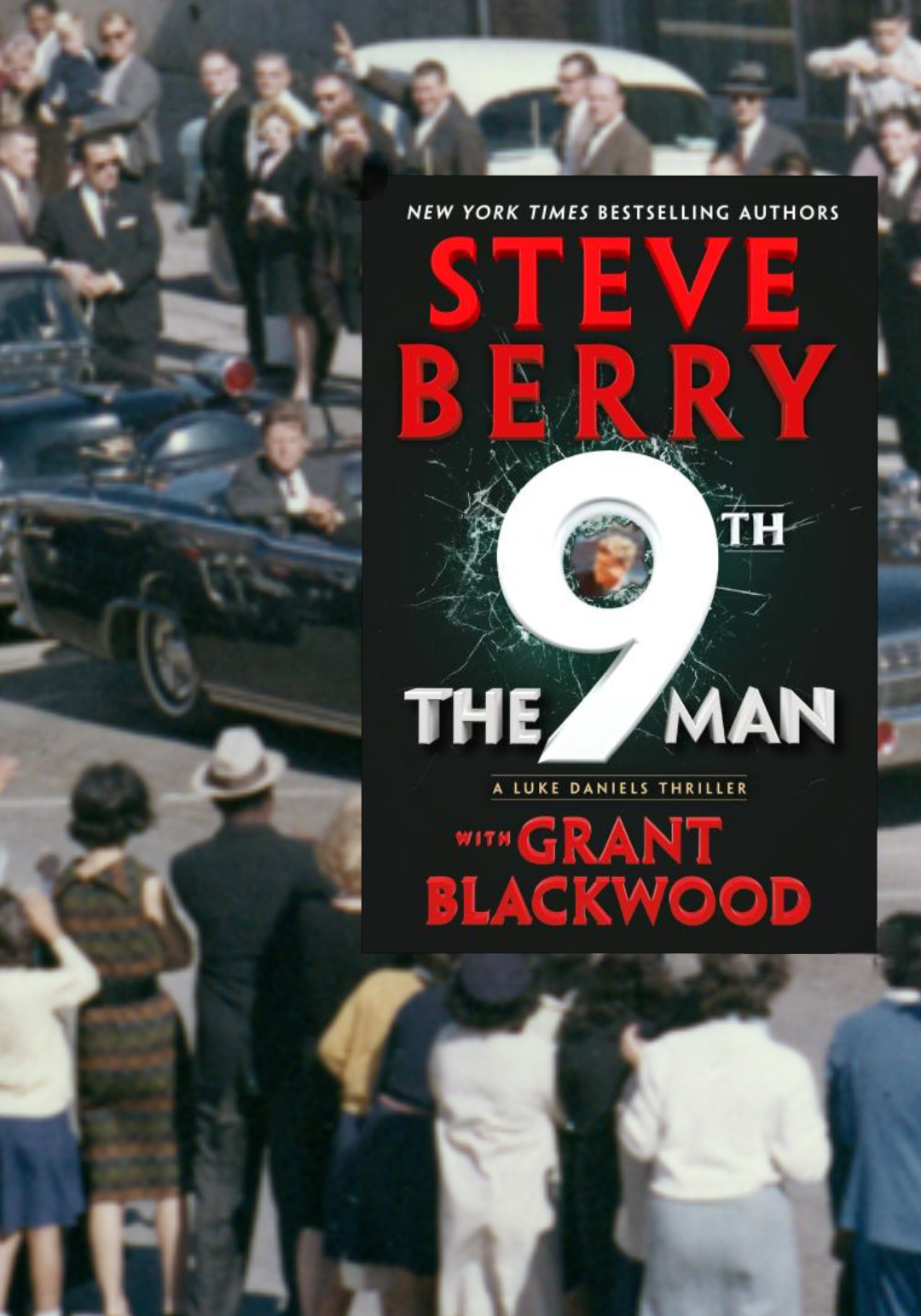
The 9th Man. Steve Berry and Grant Blackwood.  Grand Central Publishing, 2023.  368 pages.  Book 1 of 2 (so far) Luke Daniels novels.

I recently read and enjoyed the first Cotton Malone novel by Steve Berry. While Malone continues his history-based adventures, Berry has teamed up with another author to spin off a new new series featuring a younger associate of Berry. Luke Daniels.  Daniels is another southern gentlemen, like Malone, a former Army Ranger, highly trained and capable, also with a deep knowledge of history.  Same general idea, lots of action, intriguing mysteries, shady individuals, double crosses and triple crosses, lots of weapons, high body counts, and history-shaking secrets revealed.  A second Luke Daniels title was released in 2024, and another is scheduled for release in 2025.

In The 9th Man, Daniels is drawn into danger, by a woman of course, and finds himself locked in a deadly battle with a very powerful and ruthless man who will literally do anything to cover up his role in the assassination of President Kennedy.  It was a fast and enjoyable read.  I'll be reading more Cotton Malone and Luke Daniels books.


Summoned: Frances Perkins and the General Welfare

Tells the story of Frances Perkins, who was appointed Labor Secretary by FDR during the Great Depression. The first female Cabinet member, she created the Social Security program, the federal minimum wage, the 40-hour work week, and ended the legal use of child labor. Featuring interviews with Nancy Pelosi, George Mitchell, David Brooks, Lawrence O’Donnell and Amy Klobuchar.


Dear Miss Perkins:  A Story of Frances Perkins' Efforts to Aid Refugees From Nazi Germany.  Rebecca Brenner Graham.  Citadel, January 21, 2025.  336 pages.  Advance Reader's Copy.

This biography ended up on my favorite ten reads list for 2024.  I always knew Frances Perkins as a footnote, albeit a major footnote, in American history, and I always made sure to mention her when I taught, but I never did her story the justice that she deserved.  American history buffs might recognize her as the first female in the presidential cabinet, serving as FDR's Secretary of Labor.  More than casual buffs might know that she was a literal eyewitness to the Triangle Shirtwaist Company fire, standing on the street below the building as dozens of young immigrant women jumped to their deaths to escape the fire, and that motivated her to become one of the driving forces behind occupational safety and labor regulations that had a tremendous impact on American society.  She became a leading figure in the New York state government administration before FDR took her to Washington, and she continued to make history and real fundamental, lasting changes, making a real case for consideration as the most effective and important American woman in the 20th century.  Yet, few, including history buffs and teachers like myself know enough about the real Frances Perkins.

She had major struggles in her life and career, a husband who spent most of their marriage in and out of mental institutions as a manic depressive, probably what would be bipolar disorder today. She had to deal with the sexism that women in any career faced, especially politics, as she was always the only woman in the room.  She was the object of vitriolic attacks in the press, and voluminous hate mail that accused her of being a communist  and Jewish (She was Episcopalian.).  She was impeached (but not removed) by Congress, and even FDR, who had been an ardent supporter and admirer, turned his back on her when her progressivism threatened his support.  (Another strong, accomplished woman who made him what he was that he betrayed.)  At the time of her tenure, immigration fell under the purview of the Labor Department, and she made it her mission to help refugees fleeing Nazi Germany.  This book gives the reader a look into her phenomenal character and career, particularly this part of it.  She was a real American hero.


Author talk

You Dreamed of Empires.  Alvaro Enrigue.  Translated by Natasha Wimmer.  Harvill Secker, 2024.  224 pages.  

I first saw glowing reviews of this book a couple of weeks ago, reviews that hailed it as original, creative, funny, anti-colonial, genius, etc.  It's mostly an account of the events of one day in history, the day that Hernan Cortex and his conquistadors arrived in Tenochtitlan, the capital of the Aztec Empire, as the guests (or prisoners?) of Emperor Montezuma (Moctezuma II) and a meeting of two vastly different cultures that would prove to be one of the most fateful meetings of history.  My feeling after reading the book?  Meh.  Of course it's anti-colonial, otherwise it would never have been published and would never have made all the media lists of best books of the year.   The Spanish are minor characters in the story, naturally portrayed as arrogant and ignorant buffoons, totally clueless about everything.  The real story is the palace intrigue as Montezuma (Moctezuma) is simultaneously a quivering mass of uncertainty and an all-powerful man-god.  He is so powerful that if one of his subjects commits the smallest infraction of protocol, he simply tells the offender to report to the palace guards to report to the palace guards and tell them to execute him, AND HE DOES!  Yet, these weird visitors have him flummoxed,  his priests advise him that he shouldn't do what his instincts tell him needs to be done, and his empress/sister and subordinates plot against him, so he spends the day eating, napping, bathing, and consuming lots of hallucinogens.  

There's a little humor, a little magic, a little historical accuracy, and a lot of strangeness.  I don't even think it's all that original.  It reminds me of the late 1960s and early 1970s when authors and filmmakers started churning out works that redefined the western - making whites ridiculous and evil, while finally bringing humanity and a more well-rounded characterization to Native Americans.  Overall, I found the book interesting, but overrated.


Author talk

Broadway Butterfly:  Vivian Gordon the Lady Gangster of Jazz Age New York.  Anthony M. DeStefano.  Citadel, 2024.  256 pages.  

In the 1920s and 1930s, there was a group of women who followed their dreams of theatrical stardom to New York City.  There were so many that they were given a name,  "Broadway Butterflies."  Few of them attained stardom, or even work, on the Broadway stage.  Most had their dreams dashed, and some were forced to turn to even less savory occupations in dance halls and nightclubs, or, even worse as kept women, mistresses, or sex workers.  Some found themselves in lives of addiction or criminality, and several were murdered during the Jazz Age.  The most notorious example of the tragic Broadway Butterfly was probably Vivian Gordon.  On February 26, 1931, Gordon's battered lifeless body was discovered in a Bronx park.  The murder led to revelations of her life as not only a prostitute and madam, but also as a blackmailer and extortionist who kept detailed records of important men and their business with her and her girls.  These men were in the top ranks of New York society, business, and government and even included the infamous Judge Joseph Crater, who disappeared, never to be seen or heard from again.  Gordon's murder generated a press frenzy and a public outcry, revealing the entrenched corruption of the New York legal system and the blatant corruption and incompetence of the city's charismatic Mayor Jimmy Walker.  In fact, Walker was a firm ally of Governor Franklin Roosevelt before the murder, but the public nature of the mishandled and bungled investigation led FDR to turn against the Mayor so that his rising presidential campaign suffered no damage.  Was the murderer one of her angry clients, a man afraid that she could testify about the system, of someone else?  DeStefano is a Pulitzer-winning journalist who's written several books about historical organized crime figures, and he takes the reader through Gordon's story, the various theories about why she was murdered, and the political ramifications that resulted.


Friday, June 28, 2024

Shelved: Roundup of Book Posts June 2024


From CBS Sunday Morning

The Year of Living Constitutionally:  One Man's Humble Quest to Follow the Constitution's Original Meaning.  A. J.  Jacobs.  Crown, 2024.  304 pages.

I saw a story about this book on "CBS Sunday Morning" a few weeks ago and thought it sounded interesting.  I regretted my purchase before I was finished with the author's introduction.  Strike one:  the author decided to illustrate the second amendment by walking around New York City carrying a musket and bayonet everywhere.  Nobody did that in 1787.  Reeks of narcissistic, agenda-driven stunt. Strike two:  Maybe it was meant to be a joke, but he wrote that his children invoke the first amendment every time they call him names.  Even joking about that (calling a parent names) is unfathomable to me.  If it's a joke, not funny; if not, it's so far removed from my experience to make it too weird. (Yes, I am very old-fashioned in some ways.)  Strike three:  In a couple of paragraphs, he goes on and on about what he describes as the shockingly brutal and horrific language used in the Constitution.  If you're triggered by words in an historic document, maybe you should stay away from history.  I bailed on this book in the first chapter, not worth my time.


Author talk

Palace Council.  Stephen L. Carter.  Knopf, 2008.  528 pages.

"In the summer of 1952, twenty prominent men gather at a secret meeting on Martha’s Vineyard and devise a plot to manipulate the President of the United States. Soon after, the body of one of these men is found by Eddie Wesley, Harlem’s rising literary star. When Eddie’s younger sister mysteriously disappears, Eddie and the woman he loves, Aurelia Treene, are pulled into what becomes a twenty-year search for the truth. As Eddie and Aurelia uncover layer upon layer of intrigue, their odyssey takes them from the wealthy drawing rooms of New York through the shady corners of radical politics, all the way to the Oval Office."  Publisher's blurb

This is, I think, the third book by Stephen L. Carter that I've read, following Invisible, his great biography of his grandmother, and another political thriller, the genre of most of his writing.  This book is definitely a complex and suspenseful thriller that takes the reader into the world of the black upper class of Harlem and the political back rooms of Washington DC from the Brown vs Board of Education decision to Watergate.  Eddie Wesley, a rising literary figure, stumbles into a complex web of political intrigue that can, and does, become a major disruption of his life and a threat to the country.  It's an excellent read.


Author Talk

Painter in a Savage Land:  The Strange Saga of the First European Artist in North America.  Miles Harvey.  Random House, 2008.  368 pages.

In 1564, a group of French Huguenot (Protestant) colonizers landed in northern Florida and established a settlement named Fort Caroline on the St. John's River, near modern day Jacksonville, but the exact site is still unknown today.  In 1565, the Spanish founded St. Augustine and immediately set out to destroy their rival's toehold in the New World, mutilating and massacring most of the French, who were not only enemies of Spain but also Protestant heretics, so they massacred and mutilated in the name of God, forcing the French to set their sights north - Canada.  One of the few French survivors was Jacques Le Moyne de Morgues, the official artist and cartographer of the expedition, the first European artist to set foot in the continental United States and a very mysterious and significant figure in history.  The mystery?  Very little is known about his life before and after Fort Caroline.  Then, there's his American work itself.  To date, historians have discovered none, or almost none, of his original illustrations of the Native Americans in the area, illustrations of the French colonizers and the fort, and maps that he drew.  The works attributed to Le Moyne are actually reproductions of his works made by contemporaries John White (the governor of the failed Roanoke colony) and Theodor de Bry and many others, each of whom applied his own vision and agenda to Le Moyne's work.  The result is that historians have questioned the authenticity and reliability of the images.  The Indians often have European features, and they are shown using tools and weapons that the Florida Indians would have never seen.  Many of the images are incredibly violent and brutal depictions of war, sacrifice, and even cannibalism.  Le Moyne's original captions and labels have been lost or altered over time. Did Le Moyne even witness these events?  Are the misrepresentations accidental or intentional?  For what purpose and who did the misrepresenting, Le Moyne or White or de Bry?  

Even Le Moyne's work after Fort Caroline is mysterious.   He seems to have spent most of the rest of his life doing incredibly beautiful and accurate botanical paintings, but most of those works known to us today were only discovered in the 20th century.  Harvey explores these mysteries and the history of Fort Caroline  in this fascinating book.


Audiobook preview

Paperbacks From Hell:  The Twisted History of '70s and '80s Horror Fiction.  Grady Hendrix.  Quirk Books, 2017.  256 pages.

I'm not a huge fan of the horror genre, but I am well aware of the author Grady Hendrix, a huge star in the field.  Hendrix possesses a love and knowledge of the horror genre that is unmatched, a human encyclopedia on the subject.  His novels each tackle a different sub-genre, like vampires or zombies or haunted houses, include all the best (and worst) elements of the sub-genre, and are simultaneously frightening and hilarious.  In 2017, he published this history of horror literature of the 1970s and 1980s, a golden age of horror novels, movies, and television.  

I've always been a fan of shlock.  I love 1950s B-movie monster and sci-fi movies, I grew up on "Dark Shadows" reruns after school, I won't pass up a 70s demon cult movie when I'm TV grazing, and I have been known to read a really trashy novel here and there, so this history is right up my alley.  My "to view" and "to read" list has grown as a result.  It's a relatively short book, but it is so full of details and information about dozens and dozens of works and authors and about how those works reflected the events of the day.  (There is much to be learned by historians studying popular culture and entertainment.) Hendrix's humor is a super bonus, funny lines zooming left and right, like when he describes a particular group of books as "Scooby Doo, but with more orgies." Never in my life would I have dreamed that there were so many books featuring prehensile penises and nipples, man-eating (literally) vaginas, exploding babies, satanic cults, and cannibalism and much, much more.  This was a really fun read, and I think that I will read some of his novels. (And I may be spending more time in the horror sections of my favorite used book stores.)


Ken Burns interview Erik Larson on Demon of Unrest

CBS Sunday Morning


The Demon of Unrest:  A Saga of Hubris, Heartbreak, and Heroism at the Dawn of the Civil War.  Erik Larson.  Crown, 2024.  592 pages.

You can't go wrong with an Erik Larson book.   Well, except for his last book, in my opinion, an attempt at horror fiction that made my worst books of the year list.  No worries, though, he is definitely back on track with Demon, which may now be at the top of my list of favorite Larson books.  I don't think it matters much how much you know about the Civil War and the events leading up to the firing on Fort Sumter; you will learn much more from reading this book.  Larson is the undisputed king of narrative nonfiction, and like his previous books, this book reads like a thriller.  The subtitle is incredibly apt in this case, as the story is crammed full of "Hubris, Heartbreak, and Heroism."  Larson does a great job of establishing why South Carolina started the whole thing, with his explanation of the mindset of "the Chivalry," the uniquely South Carolinian mindset among its planters that simultaneously crippled progress and filled them with wild romantic fantasy, leading to the conflict.  He uses two great allusions, comparing South Carolina to Miss Havisham in Great Expectations, the jilted bride for whom time stops, and paralleling the events leading up to the firing to the Code Duello, the Dueling Code which was at the center of a southern gentleman's honor, and thus, his being.  

Larson incorporates the stories and personalities of the people involved in the events so well through diaries, letters, and documents.  Of course, there are insights into Lincoln, Davis, Confederate General P.G.T. Beauregard, and Sumter commander Major Robert Anderson, but the reader also gets to know some lesser known characters like James Hammond, slavery apologist and stoker of South Carolina's ardor for conflict, Edmund Ruffin, the pied piper of secession who traveled the South urging secession, Captain Abner Doubleday, US officer at Sumter who seldom saw eye to eye with Major Anderson (and who definitely did not invent baseball), and Mary Chesnut, wife of a prominent planter whose diary is a phenomenal record of the times.  There's also Lincoln's chief political rival and Secretary of State William Seward along with several other US and Confederate Cabinet heads and other government officials who each seemed to have their own agenda.  This book is a must read!


Authors talk

Ella and Marilyn, the "Drunk History" version

Can't We Be Friends: A Novel of Ella Fitzgerald and Marilyn Monroe.  Eliza Knight and Denny S. Bryce.  William Morrow Paperbacks, 2024.  384 pages.

Thanks to the internet, people are becoming more and more aware of an extraordinary friendship between two of the most famous women of the late 1950s and early 1960s, Marilyn Monroe and Ella Fitzgerald, legends in their fields, at the peak of their careers.  I've never been a jazz fan, and I've never sat down and listened to Fitzgerald.  To me she was just that lady who popped up on 1970s variety shows and broke the glass with her voice in a commercial in the 1980s, but I recognized her great talent.  I've seen some of Monroe's movies and thought they were interesting, but I know much more about her personal life because of the "scandals" and conspiracies.  Historical fiction authors Denny Bryce and Eliza Knight have written a very entertaining novel about the deep friendship that emerged from letters that Monroe wrote to Fitzgerald asking for voice lessons.  Their common bond, besides real mutual admiration for each other's talents, was struggle.  For Fitzgerald, the external struggles were against racism, sexism, and body-shaming, while she struggled internally with finding true love and doubting her mothering because she left her son to be raised by an aunt while she toured the world.  For Monroe, there was the sexism of Hollywood which not only affected her earning power and personal control over her career, but it also led to type-casting and unfair accusations of unprofessional behavior.  Then, there was her horrible track record with men, which was both a cause and a symptom of her mental instability, depression, and self-doubt that led to major alcohol and pills addiction. 

The book is not a biography, but the authors obviously did a great deal of research, and they created an enlightening and entertaining novel which has added to my understanding of and appreciation for both women.  (By the way, much of the recent internet storytelling gets it wrong, apparently.  Yes, Marilyn may have helped Ella get bookings in certain L.A. clubs, but Ella wasn't ignored by those clubs because she was black.  Black women like Dorothy Dandridge, Earth Kitt, and Lena Horne performed in those clubs frequently. Ella was ignored because she had a fuller figure than those women.)


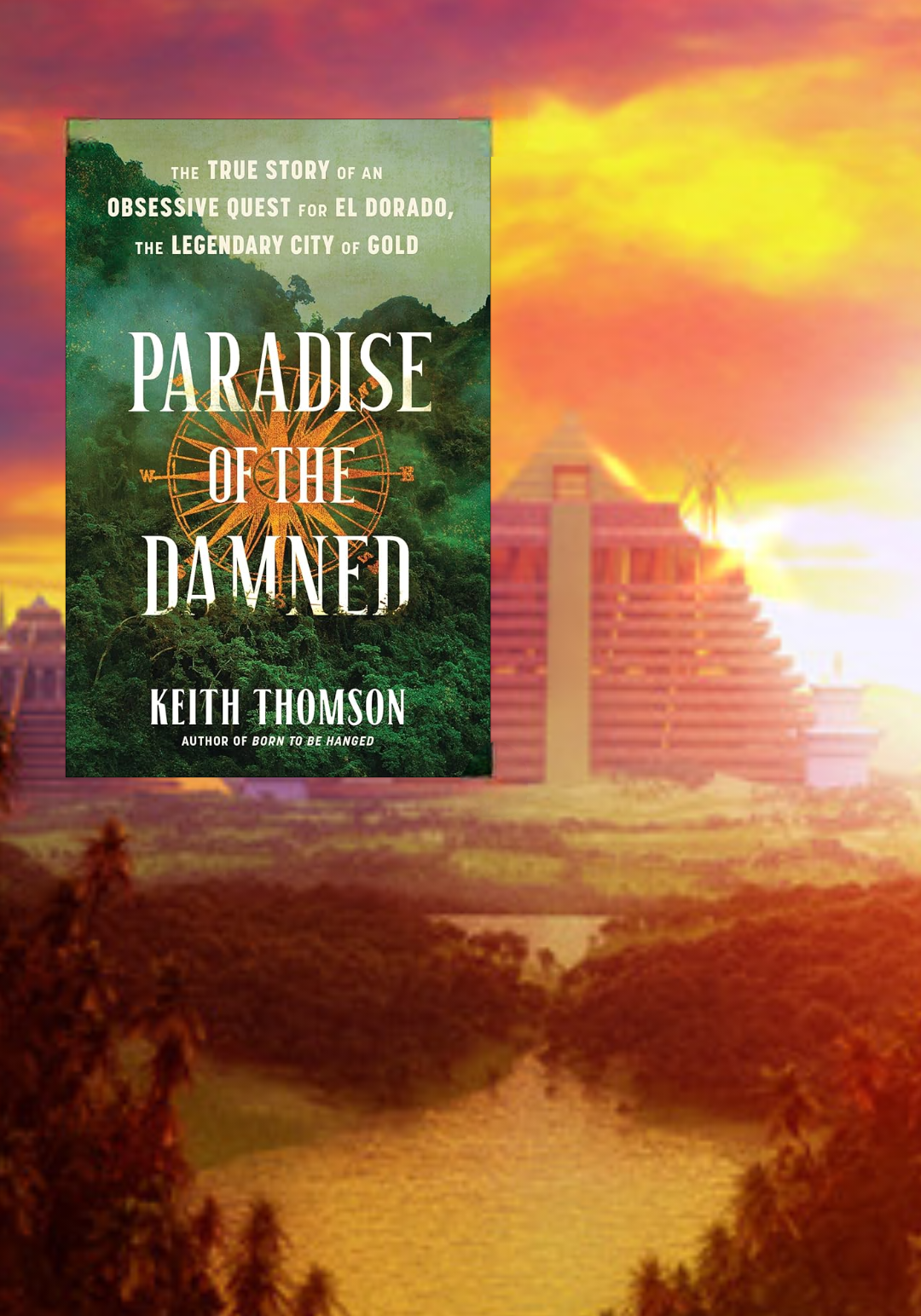
Paradise of the Damned:  The True Story of an Obsessive Quest for El Dorado, the Legendary City of Gold.  Keith Thomson.  Little, Brown, and Company, 2024.  400 pages.

Keith Thomson, the author of the excellent history of pirates Born to Be Hanged, just published Paradise in May.  It's the story of the mythical land of El Dorado, the city of gold described by  indigenous tribes and sought after by European for centuries, but this book approaches the story from a different angle than the books you've read and documentaries you've seen, focusing not on the Spanish search for the fabled city but on the English efforts instead.   Not just the English efforts in general, but the efforts of one of the most interesting Englishmen in history in particular, Sir Walter Raleigh.  Raleigh was a soldier, explorer, writer, poet, and colonizer made famous in English history and legend, for his battles against the Spanish, failed colonial attempts at Roanoke, and introduction of tobacco and potatoes to England.  He's also famous as a long-time favorite of Queen Elizabeth I and a victim of her successor, King James I.  However, he became an ardent believer in the Spanish stories of El Dorado and spent years of his life and much of his personal fortune exploring South America in search of the city that would grant huge personal riches on himself and on the queen he loved.  He and his men endured incredible hardships slogging through jungles and battling the Spanish on numerous expeditions, while his many enemies at court used intrigue and manipulation at home to push him out of Elizabeth's fickle favor, and, in the end, to get him imprisoned in the Tower of London and executed.  Thomson's book is a great review of his life, the endless political jockeying within the English court, and the impossible quest of so many Spanish and English explorers.


Monday, July 11, 2022

Florida Man (and Woman) History, Part 5

     Here are some more quintessential Florida books, about the people and the land that make Florida Florida, a place with a population made up of people from every other state, and many other countries, but yet, Florida is unlike any other place.


    It seems that every journalist in Florida dreams of being a great novelist, and they often publish collections of columns and interviews about interesting people, places, and things with Florida connections, and there is no shortage of those. Al Burt and Jeff Klinkenberg are two of those authors. I discovered them through a favorite used book store nearby. They've both published several books about "Old Florida," the natural, primitive, challenging Florida that drew a particular, maybe peculiar, breed of tough, and tough-minded, individuals who made a life for their families. Maybe a life for the better, maybe not, but in any case a life that's remarkable and worth learning about. Each book is a collection of essays and columns, great for reading here and there, and each story gives the reader a different piece of the Florida puzzle, maybe creating a fuller, more accurate picture.  Whether you live in Florida, have family here, vacation here, or just want to learn about interesting people, I suggest that you give these authors a try.


    Rick Kilby is kind of an exception himself; he's not a former journalist. He actually studied and started his career in graphic design. He started blogging about Florida tourists sites, and he's gone on to write two very interesting books about Florida tourism history. Finding the Fountain of Youth is the story of water in the last 500 years of Florida's history. We all probably learned about Ponce de Leon, the famous Spanish conquistador who discovered and named Florida in his search for a "Fountain of Youth." Well, that whole story is a myth, largely made up by people who saw an opportunity in the late 1800s and early 1900s to draw lots of wide-eyed and innocent tourists with big purses to Florida. Ponce de Leon's search has been debunked by historians for decades; it just wasn't true. However, Kilby argues, Florida's waters have drawn people for centuries, and Florida is seen by many as sort of a Fountain of Youth.
    Florida's Healing Waters is a great book about the real healing waters of Florida, the springs and rivers of Florida that have drawn people for centuries, for sustenance, for relaxation, and even for medicinal qualities. The illustrations of "Floridania" --- Florida-centric memorabilia and advertising ephemera --- found in the two books make them super interesting alone, but the stories are worth reading too.


    At the Dawn of Tourism in Florida  is a thin volume published by the Florida Historical Society about the growth of the tourism industry in Florida after the Civil War. Everyone knows the name Harriet Beecher Stowe and her importance in the movement to abolish slavery, but you might not know that she was a Florida snowbird, living in Florida during winters following the Civil War. She wrote numerous stories and books about her happy life and the natural beauty of Florida. Other former abolitionists and other northerners read her work and started writing their own Florida travelogues. So, a large number of the early tourists who lived in Florida for months each year and who started building hotels and railroads which developed the state were formerly abolitionists. It's an interesting take on Florida history. 


Monday, October 25, 2021

Florida Man (And Woman) History, Part 4

     I am always on the lookout for books about Florida and its history in order to learn more about my new home state.  Here are my reviews of the three latest reads.


    The State You're in: Florida Men, Women, and Other Wildlife is the latest book by native Floridian and journalist, Craig Pittman, the author of Cat Tale  and Oh, Florida! ,among others. Pittman has collected fifty-one of the articles he's written over his thirty year career writing for the Tampa Bay Times and other publications. He is particularly interested in Florida's history and environmental issues, but he has a knack for finding the absurd, the unusual, and the humorous in Florida and turning it into witty, interesting insights into the culture of his home state. He covers a wide range of topics, from professional mermaids to python and bear hunts to the Florida scams of "Colonel" Tom Parker, Elvis Presley's infamous manager. There are heroes and villains in the stories and lots of people, who may seem ordinary on the surface but are extraordinary underneath. Not all of his stories are for laughs, his stories about crime and criminals are as equally moving as his lighter stories are funny. But wait, there's more: one of my favorite pieces is one of the shortest, Pittman's musing on the deep, dark secret hidden by Mike and Carol Brady on The Brady Bunch.  (No, not that one) Pittman's wit and wordplay stand out, and he is a gifted observer of the human condition. The book is a quick read, and you'll be entertained and intrigued on every page. (Read Craig's 7 Questions with us here https://chattingwiththehistocrats.blogspot.com/2021/05/7-questions-with-florida-author-craig.html )


    The Seminole Wars: America's Longest Indian Conflict by John and Mary Lou Missall is the book I've been looking for  since moving to Florida. It's a relatively brief, but thorough, history of the three Seminole Wars fought between 1817 and 1858. A lot of Americans don't realize that the Seminole Wars had a huge impact on America's history in the 19th century.  Because of time and curriculum constraints, I never really spent much time on the Seminole Wars when I taught, and that's a shame. The whole American story unfolded in the Florida territory, then state. White pioneer settlers moved into dangerous, often inhospitable territory, displacing and threatening that territories native inhabitants.  Florida also was a hotspot for the debate over slaver because, for decades, enslaved African-Americans fled south from Georgia and the Carolinas into Florida, well before the more famous Underground Railroad took escaped slaves north. The U.S. army fought three wars with the Seminoles, both to protect the white pioneers and to retrieve the runaway slaves and return the "property" to their masters. Not only were the Seminole Wars the longest Indian conflict in U.S. history, but they also represented America's first defeat; the Seminoles never signed an official peace treaty with the government. The government simply gave up, making the Seminole the only "unconquered" Indian tribe. The Missalls' book is a thorough and quite readable history of the not only the wars, but also the bigger picture - that is, how the wars reflected and affected the country's issues and struggles as a whole. The Missals have also written several historical fiction novels, set during the wars, that I am tempted to read.


        Florida by Lauren Groff has been out for a couple of years, and it garnered a lot of attention, including becoming a National Book Award Finalist, and I'd picked it up a few times before finally reading it. A couple of caveats before I continue:  I mostly read nonfiction (history) and a little historical fiction; and I rarely read short stories. Since high school, in fact, I have probably only read a handful of short story collections. Florida is a collection of stories about Florida, even though they are not all set in Florida. And I just couldn't like it, even though I finished it. I enjoyed Groff's writing style, full of vivid imagery, but that wasn't enough.  I found the characters whiny, uninteresting, and unlikable. Worse , the stories have no point. They just peter out, with no climax, no conflict, no resolution. I'm wondering if that's just part of modern fiction. Any one of the dozens of short stories I read in high school literature classes is leagues better than these. I can't understand the lavish praise heaped on this book, and I can't recommend it. 


Tuesday, June 8, 2021

Florida Novels


    We've been living Florida for a year and a month now, and I'm still trying to make a dent in the reading list for my new state. I never knew that there were so many books about Florida and so many authors with Florida connections.  It seems like I meet or learn about Floridian authors, artists, and musicians every time I turn around.
    
    In a Florida Facebook group, these three novels were often recommended as Florida classics, even appearing on school reading lists, so they had to go on my reading list.

    I've already written about A Land Remembered by Patrick Smith. Published in 1984, this novel tells the story of three generations of Florida pioneers, the McIvey family. Tobias McIvey was the typical Florida pioneer, moving to Florida from Georgia in 1858.  He becomes a true Florida Cracker or cow hunter. Like many Florida pioneers, he found that he could make a living by herding the wild cattle that populated Florida and were descended from the first cattle brought to America by the Spanish in the mid 1500s. They were called Crackers because of the sound their long whips made as they herded the cattle. From that humble beginning, the McIvey descendants became real estate tycoons during the Florida land boom. The book is a great family adventure story that accurately describes the life and hardships faced by the frontier settlers.

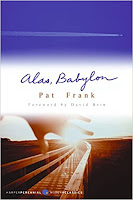
    Alas, Babylon was written during the height of the Cold War, and it fits right in with other contemporary works with an apocalyptic theme, like Nevil Shute's novel On the Beach  or the movie Dr. Strangelove or How I learned to Stop Worrying and Love the Bomb. Published in 1959, the book tells the story of the aftermath of atomic war and the surviving citizens of a small town in Central Florida. All communications and supply lines are cut off, and neighbors have to rely on each other in order to survive. An unremarkable small town lawyer finds himself in charge all of a sudden, and he rises to the occasion. It was a good read, and I recommend it.

    Lay That Trumpet in Our Hands by Susan Carol McCarthy was published in 2003, and it is based on real events and involves some real historical figures. The subject is the racial violence that plagued Florida in the 1950s. Florida has had a very troublesome history when it comes to race, with numerous lynchings, the Rosewood and Ocoee Massacres, and house bombings in the 1950s, just to cite a few. Trumpet is the story of a white family in central Florida, told through the eyes of the twelve-year old daughter. It begins with the lynching of 19-year old family friend, committed by the Ku Klux Klan, which had a very strong presence in Central Florida. As events unfold, the story involves Thurgood Marshall, the true story of the Groveland Four (see the book Devil in the Grove), and Harry T. Moore. Moore was the head of the Florida NAACP, and, on Christmas night 1951, he and his wife were murdered when a dynamite bomb blew up their home. He was the first NAACP officer to be specifically targeted, and he and his wife are considered to be among the first martyrs of the 1950s Civil Rights Movement.  I liked the book well enough, but it's obvious that the author was greatly influenced by one of the greatest novels ever written, To Kill a Mockingbird. There are a lot of similarities including the young girl storyteller with a crusading Atticus Finch-style father. I could see this book being used for middle schoolers, but Harper Lee did it much better.

Wednesday, May 5, 2021

Florida Man (and Woman) History, part 3

         I recently had the privilege of meeting two Florida authors at a book event hosted by a local book store, Joshua Ginsburg and Craig Pittman, and I've read their books. All of their books are extremely entertaining and informative, great reads for people who want to know more about my new home state, Florida.

        Joshua Ginsberg is the author of Secret Tampa Bay: A Guide to the Weird, Wonderful and Obscure, and the upcoming “TB Scavenger.” He is a writer, entrepreneur, blogger and curiosity seeker who moved to the Tampa Bay Area from Chicago in 2016. He has had numerous published works of poetry, fiction, and non-fiction, and has been a business proposal writer and professional resume writer for over 10 years. Secret Tampa is a guidebook to local history that even native Tampans probably don't know. Just open the book to any page, and the reader will find a wacky story about some site, even sites the reader may think he or she is familiar with. Since I am now a resident of the area, the book gives me a lot of ideas for trips around the Tampa Bay area. Learn more about Ginsburg in our 7 Questions: http://chattingwiththehistocrats.blogspot.com/2021/04/7-questions-with-author-joshua-ginsburg.html


        Craig Pittman is a native Floridian. Born in Pensacola, he graduated from Troy State University in Alabama, where his muckraking work for the student paper prompted an agitated dean to label him "the most destructive force on campus." Since then he has covered a variety of newspaper beats and quite a few natural disasters, including hurricanes, wildfires and the Florida Legislature. Since 1998, he has covered environmental issues for Florida's largest newspaper, winning several awards for journalism. He's written several books about Florida and Floridians, including New York Times  bestsellers Cat Tale  and Oh, Florida!   This year will see the publication of his latest book Florida Men, Florida Women, and Other Wildlife. For more information about his projects, here is his website: http://craigpittman.com/Home_Page.php   You can also hear Craig and his podcast partner Chadd Scott on their weekly podcast called "Welcome to Florida." The concept is that 900 new people move to Florida every day but nobody tells them what they've gotten themselves into, so they're  trying to do it. So far they've interviewed a python hunter, a gator wrangler, a guy who wrote a book on The Villages, a cockroach expert, a shark biologist and Carl Hiaasen, among others. Find it at https://www.buzzsprout.com/1169570 or wherever you listen to podcasts.


    Cat Tale is the fascinating story of the ongoing efforts to bring the Florida panther back from near extinction. The Florida panther is a subspecies of the big cats which once roamed throughout the United States. Growing up in South Georgia, I'd heard stories of encounters with big cats in rural areas, and even today, one hears reports or sees game camera photos and videos. Unfortunately, by the 1970s, there were thought to be only a couple of dozen Florida panthers left. Pittman, a journalist whose beat is the environment, documented the race to save the animal, interviewing all the major players. The story is sad, hilarious, maddening , depressing, and uplifting. Fortunately, despite all debacles, Florida panthers are better off now --- still not safe by any stretch of the imaging.

    Maybe you've noticed  on these book covers one of the most commonly used adjectives to describe Florida: weird. It's true. Florida is the weirdest state in the country. Floridians seem to embrace the weird. Oh, Florida! is Pittman's catalog of the weird. Each chapter tackles a different facet - environment, education, race, history politics, etc. With every page turned, I learned something new and weird about the state. You will be able to learn more about Pittman in our 7 questions to be published on May 14, 2021 https://chattingwiththehistocrats.blogspot.com/2021/05/7-questions-with-florida-author-craig.html


Friday, April 2, 2021

Florida Man (and Woman) History, part 2

     Florida's rich and unique history has provided the inspiration for many authors. Here are some more works of fiction and non-fiction which have made an impression on me.


    On New Year's Day, 1923, a white woman named Fannie Taylor was beaten and bruised when her husband returned from work to their Sumner Florida home. Word spread fast that a black man had assaulted her.  The victim never named her assailant, but the sheriff immediately accused a resident of the nearby black settlement of Rosewood. An angry mob proceeded to Rosewood where they launched three days of murder and destruction which resulted in the deaths of at least eight people. Residents of Rosewood fled, the settlement disappeared, and, for nearly 60 years, Rosewood's existence and destruction were unknown to the outside world. In 1982, a reporter for the St. Petersburg Times published a story, revealing the details to the world. Michael D'Orso published Like Judgement Day in 1996, telling the complete story.

    Devil in the Grove is one of two books about racial violence in Florida written by Gilbert King and set in citrus country. In 1949, in Groveland Florida, a seventeen-year-old girl claimed she was raped. Four black boys were accused of the crime. Coming to their defense was chief NAACP attorney Thurgood Marshall. Of course, we know that Marshall was the attorney who successfully argued against segregation in Brown vs. Board of Education and later became the first black justice on the U.S. Supreme Court. However, I learned a great deal about Marshall from King's book. Before the Brown case, he traveled around the South, acting as the defense for accused black defendants, like the Groveland boys.  The book really gave me a new respect and admiration for Marshall. At least in my prior education, Marshall had been presented as a second-tier figure in the civil rights movement. I think Devil shows that he deserves a lot more praise and recognition that he gets.  (The other King book is Beneath a Ruthless Sun; I haven't read it yet, but it's on my list.)


    The Nickel Boys , by Colson Whitehead, is a novel about the fictional Nickel juvenile detention center, and the abuse of the boys there. It's a grim read, but, like many novels, truth is stranger, or more grim, than fiction. The story is based on a real life institution called the Arthur T. Dozier School for Boys, the first juvenile detention center built in Marianna Florida and operative from 1897 to 2011. Throughout its history, Dozier was the site of horrific abuse administered by the staff, largely in the "White House," a structure built for the purpose of punishment. At least 100 boys died and were buried on the premises, in marked and unmarked graves.  


    Peter Matthiessen was also inspired by history to write the Shadow Country Trilogy, beginning with Killing Mister Watson. Watson was a real-life character who bragged of killing 57 people, including the notorious "Queen of the Outlaws", Belle Starr. In the late 1800s, he moved to the Florida Everglades, where he grew sugar cane, raised pigs, and collected wild bird feathers (At the time, feathers were in demand for women's fashion. As a result, some Florida birds were almost hunted into extinction.), and he terrorized his neighbors. In 1910, his neighbors stood up and killed him. The trilogy tells the story of the murder and the people who lived in the Everglades. Matthiessen is a great author, and I've enjoyed several of his books, including these.