Showing posts with label #nativeamericans. Show all posts

Monday, February 28, 2022

Books About Indian Boarding Schools

     Inspired by our recent visit to the "Away From Home Exhibit" ( https://ontheroadwiththehistocrats.blogspot.com/2022/02/away-from-home-far-far-away.html ), I read three books that present three different takes on the Indian Boarding School movement of the 20th century, one memoir and two novels.



    The memoir is Pipestone: My Life in an Indian Boarding School is written by Adam Fortunate Eagle,
a leader of the Indian takeover of Alcatraz Island in 1969. From 1935 to 1945, he and his siblings were students at Pipestone Indian Boarding School in Minnesota.  It is not what I expected at all from a "radical" indigenous rights leader, considering my knowledge of boarding schools and reading and hearing stories of abuse and cruelty. In this memoir, Fortunate Eagle almost looks back on these years wistfully, writing about dormitory pranks and memories of fun. There are a few poignant moments here and there, but he recalls his time at Pipestone as nothing less than "a little bit of heaven."  It's a vivid example of the fact that history has a multitude of perspectives, and one shouldn't really on just one point of view or source, but including Pipestone on a reading list about Indian boarding schools paints a more complete, and accurate, picture.

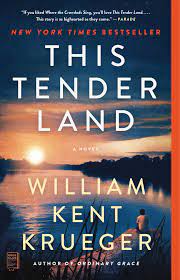
    This Tender Land is a novel set in 1932 at the Lincoln School for Indian boys and girls. It's an adventure novel focusing on the four children, Albert, Odie, Emmy, and Mose. Mose is the only Native American of the four. Albert and Odie are white orphans who find themselves the only white children enrolled at Lincoln. Emmy is the young daughter of one of the school's staff members. While at Lincoln, Odie, Albert and other Indian children suffer the cruelty and abuse dished out by the Superintendents of the the school, the Brickmans, and other staff members. When a tornado kills Emmy's mother, one of the few good staff members, Emmy is placed in the Brickman's foster care. The four children decide to escape by taking a canoe down the Mississippi River to Odie and Albert's aunt in St. Louis. Pursued by the law and the Brickmans as kidnappers of Emmy, the children have encounters various interesting characters including a Lakota man who helps Mose get in touch with his Lakota culture, the residents of a Hooverville, Bonus Army agitators headed to Washington, and a faith-healing evangelist named Sister Eve. It's a one of those great American journey books, reminiscent of Huckleberry Finn, Tom Sawyer, O Brother Where Art Thou, and Big Fish. So, in other words, it's a variation of Homer's Odyssey. It's also a tale of the Great Depression that will appeal to fans of The Grapes of Wrath  and Kristin Hannah's The Four Winds. It's an entertaining journey.

    Murder on the Red River, at first glance, is not an Indian boarding school book, but it does fit, trust me.  It is the first of a series of mysteries starring Cash Blackbear. Cash is a 19 year old Native American girl who was taken from her mother at age two and shuffled from one abusive white foster home to another in rural Minnesota in the 1950s and 1960s. She faces racism every day at school and from her foster families, who basically take in Indian foster kids for the sole purpose of adding farm labor, and the children are treated as labor, or worse. By age 13, she is an expert driver of farm trucks and tractors and works day and night on farms, and hustles pool in her free time. She has one benefactor/supporter in her life, the local sheriff, who has been the only person she can count on. The story of the book takes place about 1970, when two murders of migrant farm workers, one Indian and one white, take place. The sheriff calls Cash in to help investigate because she has a special sense, that allows her to see things others can't. So how does this relate? Well, the boarding school movement was not the only thing affecting Native American families. It seems that in Minnesota, and probably other states with large indigenous populations, the state's first reaction to family stress within indigenous families was to take the children away and put them in the inadequate and possibly dangerous foster care system, where abuse and isolation from family and culture had a huge detrimental effect on generations of indigenous children.  


Monday, December 6, 2021

My Favorite Reads of 2021

     I fell behind my reading mark a little this year, on track to reading 35-40 books by the end of the year. Now, it's time to look back on my favorite reads of the year. As it turns out, my favorites all reflect a unique way of looking at things. Here they are, in no particular order.


    Americanon: An Unexpected U.S. History In Thirteen Bestselling Books by Jess McHugh examines 13 bestselling American nonfiction books and their history and legacy. The books include the Old Farmer's Almanac, Noah Webster's Dictionary and Spellers, Emily Post's Etiquette, How to Win Friends and Influence People, The McGuffey Readers, Benjamin Franklin's Autobiography, Betty Crocker's Picture Cookbook, and Everything You Always Wanted Know About Sex. They each had a major impact on American culture when they were first published, and many are still printed, updated, and selling copies today. Each one has sold more copies over the years than the best selling novels in American history. (And many of them pass through multiple hands, especially Webster's and McGuffey's schoolbooks, exponentially increasing their reach and readership.) McHugh calls them "how-to" books because they were all designed to solve a problem or problems that the authors saw in their America, and each one had a very definite agenda, to improve American society.  She has created a list of books that are truly part of the American canon, books that reflected and molded an American identity, still impacting us today.


    In Travels With George, author Nathaniel Philbrick and his wife follow in the footsteps of George Washington's travels through the original 13 states during his presidency. Washington wanted to visit each state in order to thank the people for their support and to personally see and hear the sights and sounds of the brand new country over which he presided. Philbrick includes a lot of history, and it's fun to read the stories of Washington's visits and to see how they are remembered and commemorated today. Along the way, Philbrick meets interesting historic interpreters, archivists, and local historians and reflects on the evolution of the legacy of Washington.

    Since moving to Florida in 2020, I've made it a point to read books about Florida history and to experience the history of my new home. Journalist Craig Pittman, a rarity - a native Floridian, has made a career writing about Florida people and Florida issues. This year, he published a collection of his past stories and essays about "Florida Men, Florida Women, and Other Wildlife" in his book The State You're In.  There are 51 stories of people (and animals) who have made Florida what it is. There are criminals, victims, writers, environmentalists, developers - people of all walks of life.  Pittman's style is unique, insightful, and witty, always a pleasure to read, but always informative and educational.


    Speaking of unique, The Course of History: Ten Meals That Changed the World is a totally new and unique way of looking at history, especially for someone like me who loves history and food.  The authors look at 10  major events in history, including the Camp David Accords, Nixon's trip to China, the Tehran Conference of the Big Three, the assassination of Archduke Franz Ferdinand, and the Congress of Vienna, but they look at each event through the prism of a meal connected with each event. Each event is discussed in detail and put into the context of world history, but they also go into great detail about the big meal served during the event, describing its significance, even including the menu and the recipes. It's great fun, and I learned a lot of history too. And it reminds me of a culminating assignment I often assigned in American and European history; students were required to create a dinner party of historical figures, designing the venue, décor, and menu and explaining what happened and why they invited each guest. (Look for a future  Histocrats classroom blog on that assignment.)


    We Had a Little Real Estate Problem by Kliph Nesteroff may be my favorite read of the year. The cover calls it the "story of Native Americans & comedy," but it is so much more. It's a book about Native American History in general and about the common misconception that Native Americans are always  humorless and solemn. That misconception comes from more than a century of  perpetuated stereotypes and racism in pop culture. Nesteroff tells the story of contemporary Native American actors, stand up comedians, and sketch comedians as well as legendary past performers like Will Rogers who worked, and are working, to not only build a career in entertainment, but also to shatter those misconceptions and stereotypes. Nesteroff is a great historian of comedy, having previously written The Comedians, a thorough history of 20th century comedy.  This is a must read book if you enjoy Native American history and/or the history of comedy/entertainment.


Monday, September 27, 2021

Reading the Rez

     Contemporary Native Americans seem to be having a moment right now. Oscar-winning New Zealand director, screenwriter, and comedian recently co-created a television series called "Reservation Dogs" that is getting rave reviews for its stereotype-breaking comedic take on the lives of four Native American teens.  (It's a great show; catch it on Hulu.) There are a number of breakthrough novels by Native American authors that have appeared on best book lists recently, and Book Tok and #Bookstagram both offer Native American book dealers, reviewers, writers,  and readers new venues for discussing Native American literature. 


    In the past, I've already blogged about  a few authors who have written popular book series set, at least partially, near and on Indian reservations. While these authors are not Native American, their books reflect a real authenticity. Perhaps the best known series is the Leaphorn and Chee series, consisting of 25 novels so far, written by Tony Hillerman and his daughter Anne Hillerman, who took up the series when her father, Tony, died.  In the series, Joe Leaphorn, Jim Chee, and Bernadette Manuelito are members of the Navajo Nation police force; the Navajo Nation is the largest land area retained by an indigenous nation in the US, encompassing portions of Arizona, Utah, and New Mexico. Each of the Leaphorn mysteries involve elements of Navajo culture and lots indigenous characters, and the detectives are usually forced to navigate in the indigenous and non-indigenous worlds in order to solve the mysteries. I've read all of the Leaphorn and Chee series, and I recommend them for both the mystery reader and for those who are looking to learn more about Navajo culture.


    Another series which I've enjoyed and recommend is the Sheriff Walt Longmire series, by Craig Johnson, the source of the tv series "Longmire."  Longmire is a sheriff in rural Wyoming in fictional Absaroka County, named after the real Absaroka (Also know as Apsaalooke or Crow) tribe and mountains. To date, there are 17 Longmire novels, and the sheriff often finds himself dealing with Native American characters and reservation affairs, but the reservation is the Cheyenne reservation, not the Absaroka, for whom the county is named. There are several recurring Native American characters throughout the series, but the sheriff's best friend and oft-times partner is Henry Standing Bear, who ahs been Sheriff Longmire's boon companion since high school football days and through their service in the Vietnam War. (By the way, I love the audiobook versions of the Longmire books because of the great narrator, George Guidall, but I have to admit that I'm not a huge fan of the tv adaptation.)


    In the past few months, however, I have read the chance to read three very good books by Native American authors and reflective of contemporary reservation life. The first was Midnight Son by James Dommek Jr, Josephine Holtzman, and Isaac Kestenbaum. It is an Audible original and very much feels like a podcast, and it also stands out from the others because it is the true story of an Alaskan native man named Teddy Kyle Smith who was starting to get noticed as an actor in small independent films when he apparently went on a crime spree in the Alaskan wilderness. The story follows Dommek on his quest to find out about the real Smith and to try to understand what happened. It was a very interesting story, well told/narrated by Dommek himself, and it delves into Native Alaskan culture and folklore.


    Winter Counts by David Heska Wanbli Weiden, a member of the Lakota nation, and Firekeeper's Daughter by Angeline Boulley, a member of the Ojibwe Nation, have a lot in common. They've both gotten great reviews and a lot of attention. Firekeeper's Daughter is set to become a Netflix series. They are both first novels for their authors. They both deal with major blights on Native American reservations: drugs, crime, hopelessness, despair, and exploitation. They also portray a broken reservation system, and the willful neglect of the Federal government and the Federal government's unwillingness to prosecute crime on reservations. And even though the Lakota and Ojibwe reservations are miles apart and homes to different nations, it was interesting to see similarities in slang words used on the reservations and other cultural elements.

    Firekeeper's Daughter is actually a Young Adult novel, and it seems like the author threw in every popular element of young adult fiction: sex, drugs, alcohol, violence, sports, a strong determined teen girl who just doesn't fit in, teenage angst, clueless (or evil) adults, etc. Eighteen-year old Daunis Fontaine finds herself involved in a federal drug investigation on the Ojibwe reservation, and she becomes an undercover informant for the FBI, a decision which finds her dragged into a very dangerous operation.

    Winter Counts  is also about a teen ager, a boy this time, who finds himself in the center of a dangerous undercover federal investigation of a drug ring that has introduced heroin onto the Rosebud Lakota reservation, but he is not the main character. The main character is the boy's uncle, Virgil Wounded Horse. Wounded Horse is the local enforcer on the reservation. Because the enforcement of laws on reservations is, to put it mildly, haphazard or non existent, people hire Wounded Horse to exact revenge on people who have wronged them.  This is apparently a real thing on reservations. Wounded Horse is dragged into the drug investigation when his nephew overdoses on heroin. Winter Counts is an interesting look into reservation life, and it feels like the author plans a Wounded Horse series of books.