Showing posts with label #memoirs. Show all posts

Friday, February 28, 2025

Shelved: Books Read, Reviewed, and Shelved in February 2025


Author podcast appearance 


The Sinners All Bow:  Two Authors, One Murder, and the Real Hester Prynne.  Kate Winkler Dawson.  G.P. Putnam's Sons, 2025.  320 pages.

Kate Winkler Dawson has made a name for herself as a true-crime author and podcaster, and her newly published book is a great one.  It's a great topic, a story-behind-the-story, a whodunnit, a true crime story, a story-that-inspired-a great-story story.  On December 1832, Sarah Maria Cornell was found dead,  hanging, on a small New England family farm.  Sarah was a mill girl.  Like many other single girls in New England, she had been drawn to the textile mills and long, hard work days, far from their families.  Her life was difficult, and she struggled.  She found solace in Methodist churches and meetings.  The Methodists were a relatively new denomination, and the established Congregationalists looked down on them, aghast at their fervent - in their eyes, frenzied and wild -  worship style and their loud, frantic, "hell-fire and damnation" style of preaching that didn't require formal education. In their eyes, Methodists were drunk, ignorant, promiscuous, and criminal, blasphemers Traditional, staid New Englanders also tended to look down on mill girls in general, often considering them wanton women, challenging societal mores.  Sarah's death stirred up a lot of controversy, especially after it was discovered that she was pregnant.  Questions arose.  Was it murder or suicide? Who was the baby's father?  As to the latter question, evidence soon pointed to a local, married Methodist minister named Ephraim Avery.  Was he also a murderer?  A noted author of the time, Catherine Read Williams,  immediately began investigating and published her own book about the case in 1833, perhaps the first true crime book in American history.  The case, and Williams' book inspired another book that you may have heard of, a little novel called The Scarlet Letter by Nathaniel Hawthorne.  Nearly two hundred years later, Dawson takes up the investigation, using Williams work, her own research, and modern forensics and experts to answer the questions and determine the truth, successfully weaving the stories of Sarah, Hawthorne, and Williams together.


CBS Sunday Morning interview

Cher:  Part One:  The Memoir.  Cher.  Dey Street Books, 2024.  432 pages.

Cher is the Icon of all Icons.  Before Chappell Roan, there was Gaga.  Before Gaga, there was Madonna.  Before Madonna, there was Cher.  And she's bigger than all of them. Her remarkable career is unique and unparalleled. The only artist to top Billboard charts in seven consecutive decades, she is the winner of an Academy Award, an Emmy, a Grammy, and a Cannes Film Festival Award, and an inductee to the Rock and Roll Hall of Fame who has been lauded by the Kennedy Center. It's hard to name another entertainer whose life has been filled with re-inventions and rebirths.  Now, she's telling her story.

And what a story it is.  Her family's history and her childhood were chaotic, to put it mildly.  The Grapes of Wrath and Tobacco Road look like happy fairy tales by comparison.  It becomes even more surreal (Speaking of surrealism, the later story about Sonny and Cher meeting Salvador Dali is one of my favorite anecdotes in the book.) when she adds stories about playing with Dean Martin's children and Liza Minnelli.  Part one covers her childhood through the 1970s, focusing, of course, on her marriage and partnership  with Sonny Bono and their rise to stardom,  and their divorce.  It ends with her divorce from Greg Allman and with Cher on the verge of launching her acting career.  Cher's always been known for her honesty, openness, and humor.  She pulls no punches here, and I'm looking forward to part two.


Tom Jones with Little Richard on "This Is Tom Jones!", 1969

Tom Jones:  Over the Top and Back.  Tom Jones.  Michael Joseph, 2015.  400 pages.

Like Cher, Tom Jones is an icon with a long and legendary career stretching over decades, with massive roller coaster ups and downs, and both have reinvented themselves and demonstrated the willingness to grow and adapt.  In 2015, he published his autobiography, and, like Cher's, it's a winner.  The stories are incredibly entertaining, and honestly told.  Unlike Cher, Tom concentrates mostly on his music and his career, not as much on his personal life and his marriage, and he never even alludes to the stories of thousands of sexual partners while on the road.  However, it's a great story told by a great entertainer who is still going strong.  We saw him live in concert a couple of times in his late 70s and were blown away, and, last week, I just purchased tickets to see the 84-year old in concert in May.  (Note:  I listened to the audiobook version, narrated by the great actor Jonathan Pryce.  Pryce does a spectacular impression of Jones.)  


Author Talk


From Saloons to Steakhouses:  A History of Tampa.  Andrew T. Huse.  University Press of Florida, 2024.  338 pages.


This is, hands down, the best history of Tampa and one of the best histories of Florida that I've read so far.  What's not to like when an author combines food and history?  Modern Tampa was founded in 1887, a rough and wild frontier town.  Yes, people often forget, or were never aware, that the bulk of non-indigenous settlement of Florida took place late in the19th century, and "pioneers" were moving into the state and carving out homesteads well into the first quarter of the 20th century.  Tampa was a frontier town, drawing homesteaders and cowboys, before it was discovered by developers, and then really started booming when it became of the headquarters of US military forces during the Spanish-American War and cigar factories started attracting Cuban, Spanish, and Italian workers.  It was a wild and crazy place that was, if not totally lawless, at least law-challenged.  Saloons, bars, gambling halls, and theatres sprung up for entertainment.  There was lots of money to be made, especially for the proprietors of these establishments and for the politicians and lawmen that they paid to look out for their interests.  Huse uses newspaper stories and firsthand accounts to tell the city's story over the century, describing "temperance advocates who crusaded against saloons and breweries, cigar workers on strike who depended on soup houses for survival, and civil rights activists who staged sit-ins at lunch counters. These stories are set amid themes such as the emergence of Tampa’s criminal underworld, the rise of anti-German fear during World War I, and the heady power of prosperity and tourism in the 1950s." (from Amazon blurb)  It is thoroughly entertaining and enlightening.


Steve Berry discussing the creation of Cotton Malone


The Alexandria Link.  Steve Berry.  Ballantine Books, 2007. 480 pages.  Book 2 of 19 in Cotton Malone series.

Cotton Malone returns in his second outing as a retired elite special agent from Atlanta turned rare book dealer in Copenhagen.  This time, his son is kidnapped, and his Copenhagen shop is burned to the ground by a shadowy group of millionaires and billionaires whose aim is to force him into finding the famed Library of Alexandria, thought to have been destroyed 1500 years ago.  Their goal is to find historical evidence housed there that would ultimately  upend the entire Middle East, destroy the very foundations of Judaism, Islam, and Christianity, and possibly cause World War III.  Cotton and his ex-wife have to work together to find and free their son and solve the mystery, while his former boss in the States finds herself embroiled in a deadly conspiracy that literally reaches the highest levels of the US government as she tries to help Cotton.  

The Cotton Malone series is fast-paced action based on real historical fact and mystery, creatively embellished by the author, and it will definitely appeal to readers of political thrillers.  There seem to be certain tropes present in Steve Berry books like globe-trotting, secret code deciphering, multiple betrayals, mysterious secret societies, and, for some reason, shootouts in churches and historical buildings.  They're good adventure stories that will appeal to history buffs.  They're good adventure stories that will appeal to history buffs. These first two entries both deal with biblical mysteries, New Testament in the first and Old Testament in the second. (And they're better than later Dan Brown books in my opinion.)


Thursday, November 30, 2023

Shelved: Roundup of Book Posts November 16 - 30, 2023


Author talk

All the Sinners Bleed.  S A Crosby.  Flatiron Books, 2023.  352 pages.

"Mystery/Thriller/Suspense" is not a usual genre for me to read, but I've read great things about author S.A. Crosby, and he is one of the guest authors at February's Savannah Book Festival, so I decided to give his latest a try.  It ended up being a good read. The "Mystery/Thriller/Suspense" part is a pretty good thriller that definitely kept me engaged, but there's more to Crosby's books.  He's gotten a lot of attention because he's very good at writing thrillers through the southern history lens.  His books incorporate all the southern threads:  race, class, poverty, religion, change, and resistance to change.  

All the Sinners Bleed's main character is Sheriff Titus Crown, former FBI agent and the first black sheriff in a rural Virginia county.  He has a lot to deal with. Memories of his last major FBI case, which left him mentally and physically damaged, affect every aspect of his personal and professional life as he steps into his new role as Sheriff of the county he was born and raised in.  He knows the people, their stories, and their attitudes.  A year into his tenure, a serial killer emerges, and it becomes Titus' job to stop him.  History is a major part of the story, the characters' histories, the community history, and southern history in general.

Great quote from the book:  "It occurred to him that no place was confused about its past or more terrified of the future than the South."  


James Garner on The Tonight Show

The Garner Files.  James Garner and Jon Winokur.  Simon & Schuster, 2011. 288 pages.  

James Garner may be the most beloved man in the history of the entertainment industry.  No one has ever had a bad word to say about him, and co-stars, crewmembers, and friends speak in glowing terms. Men love his common sense, humble, smart, and funny on -screen characters, and women love his tall, dark, handsome, sensitive, and humorous side. As the saying goes, women want to be with him, and men want to be him or at least be buddies with him.

I'm no exception.  "Maverick" is my all-time favorite western tv show and character, and I still watch often.  I watched "The Rockford Files" as a kid and still watch occasionally.  I discovered his autobiography from a social media reel that quoted from it.  The man was everything you would expect.  James Bumgarner grew up in Depression-era Oklahoma, and he had a really hard life with an alcoholic father and an abusive step-mother.  He got into acting because he didn't want to be a carpet-layer, and he carved out a fantastic career.  The whole book is a great read, and my impressions of Garner are confirmed.  He does seem to really have been a great guy.  OK, he did have one major defect:  even the scent of garlic or onions made him physically ill, but I can overlook that.

Garner, Maverick, and Rockford fans will really enjoy the book with all of its behind the scenes stories.  Garner created two of the most unique, interesting, and beloved characters in television history.  "Maverick" and "The Rockford Files" are both genre-benders that have endured for decades.  Throughout his career, Garner hated all of the trappings of Hollywood stardom, the awards, the pretensions, the publicity, and the business aspects.  He simply saw acting as a job (better than laying carpet), and he did his best at it.  Along the way, he treated co-stars, crew members, and fans respectfully and became one of the most admired and universally loved people in entertainment history.


CBS Sunday morning segment 


Thank You (Falettin Me Be Mice Self Agin): A Memoir.  AUWA, 2023.  320 pages.  

I have always been aware of Sly and the Family Stone. Peripherally, growing up in the 70s and 80s. Mostly country music was played in our house, and my older brother was listening to rock, especially southern rock, but I heard Sly Stone music and caught variety and talk show appearances here and there.  Then, he seemingly disappeared.  I discovered funk as a teen and saw huge connections between Sly Stone and Prince, Rick James, George Clinton, and The Time, so I went back and dug slightly deeper into Family Stone music, still didn't know much beyond the hits.

As Sly and the Family Stone climbed the charts, Stone, aka Sylvester Stewart, fell into the trap of drug addiction and developed an unprofessional reputation of no-shows, tardiness, abbreviated and bad performances, incoherent interviews, tantrums, excess, and even gunplay.  As a result, he disappeared from the music industry. (Actually, he still worked, sometimes in front of very small audiences.) Thankfully, he's now in a period of sobriety, at age 80, and he tells his own story in this just published autobiography.  In spite of his struggles with drug use, the story is clearly and thoughtfully told.  I'm amazed by his memory.  His genius also shines through as it becomes clear that he became a real student of music and music theory at an early age, and he was calculating and methodical about so much of his career, not just the music itself, but also how he put the band together, how he dealt with record company executives, and how he managed the band,  He created a new kind of music and brought people together during a very divisive period, creating iconic and unique songs that have stood the test of time, and he was a major influence on many performers since, but he wasn't always the best human being. It's great that he is still around to tell his story and perhaps still be recognized during his lifetime.  Most people around him in the 1970s probably never imagined that would have been possible.


Interview in two parts (audio)

An Edible History of Humanity.  Tom Standage.  Bloomsbury USA, 2010.  288 pages.

In 2005, Tom Standage published A History of the World in 6 Glasses, telling history through the histories of 6 of the most common drinks in the world, including coffee, tea, beer, and Coke. It became one of my favorite  reads. In 2010, he published An Edible History of Humanity, a more general look at world history.

"More than simply sustenance, food historically has been a kind of technology, changing the course of human progress by helping to build empires, promote industrialization, and decide the outcomes of wars. Tom Standage draws on archaeology, anthropology, and economics to reveal how food has helped shape and transform societies around the world, from the emergence of farming in China by 7500 b.c. to the use of sugar cane and corn to make ethanol today. An Edible History of Humanity is a fully satisfying account of human history." (publisher's blurb)

The result is a really engrossing new perspective on history, but it's not quite as engrossing, in my opinion, as Six Glasses. It reads a little drier --- no pun intended -- and at times is a little dense in science. As the title implies, it's  not as much about specific foods as about the impact of certain foods, like grains, sugar, and spices, and the use of food by governments to drive economies, force change, and even to wage war. 


Author interview

Black Death at the Golden Gate:  The Race to Save America From the Bubonic Plague.  David K. Randall.  W.W. Norton & Company, 2019.  304 pages.  (American Experience documentary here https://www.pbs.org/wgbh/americanexperience/films/plague-golden-gate/ )

A deadly epidemic, originating in Asia, threatens  the US.  Politicians, the press, and scientists are divided and at odds with each other on how to deal with the threat.  Various jurisdictions discuss and implement quarantines and start requiring health documents for travel.  At-risk people are isolated. Large portions of the population lose faith in the government and the healthcare system. Many refuse vaccinations. 

No, not 2020 and the pandemic. All of this took place in California in the first decade of the 20th century. In 1900, the first cases of bubonic plague, black death, occurred in San Francisco's  Chinatown. Eventually, there are over 100 confirmed deaths, and probably many, many more hidden from authorities. While one bacteriologist, one of the first in America,  recognizes the grave threat and fights it, politicians, the press, the US Surgeon General ( his boss), Chinese business and tong leaders, and President  McKinley all actively conspire to deny the plague's existence and to destroy the career  of the one man who knows what's  going on.

This book, published in 2019, very much reads like an Erik Larsen or David Grann work- in other words, first-rate. ... And if you're  that rare bird that has any remaining trust in politicians, journalists, or humanity in general, be prepared to lose some of it.


Thursday, November 16, 2023

Shelved: Roundup of Book Posts November 1 - 15, 2023


"The Bizarre Origins of Florida Man"

Florida Hustle.  Paul Wilborn.  St Petersburg Press, 2022.  310 pages.

Swamp Story.  Dave Barry.  Simon & Schuster, 2023.  320 pages.

Tourist Season.  Carl Hiaasen. G.P. Putnam's Sons, 1986.  272 pages. (One of many "Florida Man" books by Hiaasen)

The "Florida Man"/"Florida Woman" trope is ubiquitous.  When you see it in a headline or hear it in a tease, you know you're in for some weird and wacky story that you will most likely repeat to friends.  There are jokes, tv shows, podcasts, newsletters, books, memes galore, and tons of merchandise. Many of the true stories are documented and archived by our friend, author and journalist Craig Pittman in his "Welcome to Florida" podcast, weekly newsletter, and books and articles.  (Website https://craigpittman.com/ )

However, I don't think I realized that "Florida Man" also covers a whole unique genre of fiction, and I've sampled several in the last couple of years, including the three featured here.  I've noticed some similar characteristics.
1.  written by former newspaper writers, especially of Tampa, St. Petersburg, or Miami newspapers
2.  All of the characters are losers in some way: damaged, lonely, addicted, abused, busted relationships.
3.  Rich people are all especially miserable.
4.  There always weird, gross, criminal, violent, incompetent pairs of brothers to hire as henchmen.
5.  Women are all incredibly sexy and end up with the loser hero who always forgives their treachery (and their always treacherous to one degree r another).
6.  Every good story involves Seminoles, the Everglades, or at the very least, alligators.  
7. All Florida biological families are broken. "Chosen" families are forever. 

Look, they're not great literature or necessarily historical,, but they're fun reads usually.


Author Talk


Through the Groves:  A Memoir.  Anne Hull. Henry Holt & Co., 2023.  224 pages.

I guess it's mandatory:  if you've ever written for a Tampa, St. Petersburg, or Miami newspaper, you are required to publish at least one book of some sort.

Journalist Anne Hull published her memoir of growing up in 1960s Central Florida.  My wife grew up near Orlando, and I have a couple of friends and multiple cousins who grew up in Central Florida and on the Gulf Coast around the same time, but none of them had connections to the state citrus industry that Hull and her family had.  Meanwhile, I grew up in rural South Georgia.  So, even though Hull's experiences are different, there are definitely familiarities.

Through the Groves has gotten a lot of buzz and acclaim, and it has appeared on many lists of best books of the year.  I realize there is a huge audience for this story, and some readers will absolutely love it.  However, it's just not for me.  Don't get me wrong, Hull is an excellent writer and storyteller.  I simply found the story lacking.  There are some family difficulties and there is inner turmoil within the young Hull, nothing groundbreaking or incredibly shocking or publishing worthy.  There are a lot more interesting lives out there.  Just my opinion, but I'm sure some of you will enjoy it, and that's fine too.


"Finding Traces of a Failed Aryan Colony in Paraguay" New York Times

Forgotten Fatherland:  The True Story of Nietzsche's Sister and Her Lost Aryan Colony.  Ben Macintyre.  Crown, 2011.  320 pages.

I didn't think this was possible:  a Ben Macintyre book that disappointed me.   Macintyre is a British journalist and author who has written many books and created many documentaries, mostly about World War II.  He's highly regarded, and I enjoyed a couple of his previous books.  In 2011, he published a book about his quest for Nueva Germania, a German colony within Paraguay founded by the sister of philosopher Friedrich Nietzsche and her husband in the 1880s.  Nueva Germania was to be a New Germany, free of non-Aryan handicaps.  It failed miserably, but Elisabeth Nietzsche's greatest work was still ahead of her.  First, she singlehandedly edited, shaped, made up, and published her brother's works as he declined into dementia and death.  Without her work, the world at large probably would never have heard Friedrich Nietzsche.  Only a very few academics ever read his philosophy during his lifetime, and it was universally dismissed until Elisabeth got her hands on it.  Second, she linked him and his work forever with the burgeoning Nazi movement and with Hitler.  There is absolutely no evidence that Hitler ever personally read or embraced Nietzsche's ideas, and, in fact, Macintyre makes the case that Nietzsche himself would have fervently opposed fascism, antisemitism, and Nazism just as much as Elisabeth embraced them all.  Hitler, however, realized the potential propaganda value in using the dead philosopher and his living sister's celebrity status among some Germans, and he used them very effectively, so much so that we now associate Nietzsche with Nazism.  Macintyre argues that our connection of the two is faulty.

Unfortunately for me, the book devotes too much time to Nietzsche's philosophy and too little time to the actual colony itself.  I wanted to know more about the colony and about the remnants of the colony that still exists.  Yes, there is a small community of German-Paraguayans descended from the original colonists who struggle to maintain their German purity today.  Alas, there are very few pages about the colony itself.  


Panel discussion on SAS including Damien Lewis

Brothers in Arms:  Churchill's Special Forces During WWII's Darkest Hour.  Damien Lewis.  Citadel, 2023.  400 pages.

Regardless of his faults, Winston Churchill was ahead of his time when it came to recognizing the importance of propaganda and espionage as major parts of the war effort.  He was very involved in those areas throughout World War II.  When he called for volunteers to join the Special Forces and undertake espionage and sabotage missions behind enemy lines, scores of men answered his call, and the SAS was formed.  

If you are a military history buff, this book is definitely for you.  Damien Lewis exhaustively searched through declassified archives, letters, diaries, military reports, and rare photos and films.  Much of the material he researched had never been seen by the public before.  Along with all of that documentation, he conducted numerous interviews with surviving veterans and family members.  The result is an exciting narrative of incredible acts committed by an  incredible assortment of unbelievable real-life characters.


Author's Lecture


The Poisoner's Handbook:  Murder and the Birth of Forensic Medicine in Jazz Age New York.  Debra Blum.  Penguin Press, 2010.  336 pages. (American Experience PBS documentary https://www.pbs.org/wgbh/americanexperience/films/poisoners/ )

The Roaring 20s saw a lot of "booms."  The economy boomed, women's rights boomed with the passage of the 19th amendment granting suffrage and with flappers doing things respectable women of past generations never dreamed of, new literary and art movements boomed, jazz dominated the music scene, and there were literal booms of violence as anarchists and racists used bombs, guns, riots, and lynchings to reach their goals.  There was also an epidemic of deaths by poison that swept through New York City during the 1920s. Chloroform, arsenic, strychnine, and other chemicals, natural and man-made, were easy to get, and historically difficult to detect. Before the 1920s, it was extremely difficult to prove murder by poisoning in a court of law; science just wasn't up to the task.  However, that began to change in the 1920s.  NYC's Chief Medical Examiner Charles Norris and toxicologist Alexander Gettler undertook groundbreaking work in a laboratory at the city's Bellevue Hospital. Their work was instrumental in the development of forensics and toxicology.

Author Debra Blum examines their work in this book which is a mixture of true crime, 1920s history, and science history.  The final product is a very interesting read. 

Monday, February 28, 2022

Books About Indian Boarding Schools

     Inspired by our recent visit to the "Away From Home Exhibit" ( https://ontheroadwiththehistocrats.blogspot.com/2022/02/away-from-home-far-far-away.html ), I read three books that present three different takes on the Indian Boarding School movement of the 20th century, one memoir and two novels.


    The memoir is Pipestone: My Life in an Indian Boarding School is written by Adam Fortunate Eagle,
a leader of the Indian takeover of Alcatraz Island in 1969. From 1935 to 1945, he and his siblings were students at Pipestone Indian Boarding School in Minnesota.  It is not what I expected at all from a "radical" indigenous rights leader, considering my knowledge of boarding schools and reading and hearing stories of abuse and cruelty. In this memoir, Fortunate Eagle almost looks back on these years wistfully, writing about dormitory pranks and memories of fun. There are a few poignant moments here and there, but he recalls his time at Pipestone as nothing less than "a little bit of heaven."  It's a vivid example of the fact that history has a multitude of perspectives, and one shouldn't really on just one point of view or source, but including Pipestone on a reading list about Indian boarding schools paints a more complete, and accurate, picture.

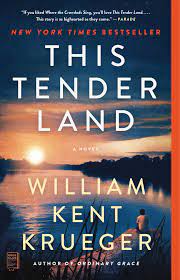
    This Tender Land is a novel set in 1932 at the Lincoln School for Indian boys and girls. It's an adventure novel focusing on the four children, Albert, Odie, Emmy, and Mose. Mose is the only Native American of the four. Albert and Odie are white orphans who find themselves the only white children enrolled at Lincoln. Emmy is the young daughter of one of the school's staff members. While at Lincoln, Odie, Albert and other Indian children suffer the cruelty and abuse dished out by the Superintendents of the the school, the Brickmans, and other staff members. When a tornado kills Emmy's mother, one of the few good staff members, Emmy is placed in the Brickman's foster care. The four children decide to escape by taking a canoe down the Mississippi River to Odie and Albert's aunt in St. Louis. Pursued by the law and the Brickmans as kidnappers of Emmy, the children have encounters various interesting characters including a Lakota man who helps Mose get in touch with his Lakota culture, the residents of a Hooverville, Bonus Army agitators headed to Washington, and a faith-healing evangelist named Sister Eve. It's a one of those great American journey books, reminiscent of Huckleberry Finn, Tom Sawyer, O Brother Where Art Thou, and Big Fish. So, in other words, it's a variation of Homer's Odyssey. It's also a tale of the Great Depression that will appeal to fans of The Grapes of Wrath  and Kristin Hannah's The Four Winds. It's an entertaining journey.

    Murder on the Red River, at first glance, is not an Indian boarding school book, but it does fit, trust me.  It is the first of a series of mysteries starring Cash Blackbear. Cash is a 19 year old Native American girl who was taken from her mother at age two and shuffled from one abusive white foster home to another in rural Minnesota in the 1950s and 1960s. She faces racism every day at school and from her foster families, who basically take in Indian foster kids for the sole purpose of adding farm labor, and the children are treated as labor, or worse. By age 13, she is an expert driver of farm trucks and tractors and works day and night on farms, and hustles pool in her free time. She has one benefactor/supporter in her life, the local sheriff, who has been the only person she can count on. The story of the book takes place about 1970, when two murders of migrant farm workers, one Indian and one white, take place. The sheriff calls Cash in to help investigate because she has a special sense, that allows her to see things others can't. So how does this relate? Well, the boarding school movement was not the only thing affecting Native American families. It seems that in Minnesota, and probably other states with large indigenous populations, the state's first reaction to family stress within indigenous families was to take the children away and put them in the inadequate and possibly dangerous foster care system, where abuse and isolation from family and culture had a huge detrimental effect on generations of indigenous children.  


Tuesday, November 3, 2020

Time for a Good Laugh, part 1

     If ever we needed a laugh, it's now. 2020 has been rough for all of us. Over the last year, I've read several books by and about comedians.  They are a lot of laughs, of course, but they are also great entertaining stories, with some good life lessons imparted as well. 

    I actually listened to all of these, narrated by the authors themselves, and I highly recommend this route. It was great to hear the subjects tell their own stories. 


    Eddie Izzard's Believe Me definitely falls into that arena. As he narrates the book, Izzard often goes off text, on tangents that he didn't include in the book. It's a really entertaining look into how his mind works. Izzard is a British comedian and actor who is known for several things like performing in women's clothing, performing his stand-up in multiple languages around the world, and running 27 marathons in 27 days for charity. In his book, he writes frankly about his childhood, his career, and his alternative sexuality. Izzard has a fan base that crosses all demographic lines because he has the ability to reach practically any audience.
    Are you one of the people who discovered actor Leslie Jordan from his quarantine videos on Instagram and other social media?  Probably not. Like me, you've probably seen him in his fantastic scene-stealing roles on sitcoms in the last 2-3 decades. It seems he's been on every sitcom there is, and he even made an appearance on an episode of  Star Trek: Voyager.  During the COVID quarantine, he started posting hilarious videos of random thoughts, and he became a viral social media phenomenon. If you haven't seen one (language warning):


My Trip Down the Pink Carpet  is the hilarious story of his career.

    Name Drop is a collection of stories of comedian Ross Mathews' encounters with celebrities during his career. It is really a fun, fast read.
    One of the greatest storytellers or raconteurs alive today in my opinion is movie director John Waters. He's published several books, and he does an annual speaking tour around Christmas. We've seen his show in Atlanta a couple of times. He's always entertaining, even if you don't particularly like his movies. Mr. Know It All is his latest memoir.