
We've been living Florida for a year and a month now, and I'm still trying to make a dent in the reading list for my new state. I never knew that there were so many books about Florida and so many authors with Florida connections. It seems like I meet or learn about Floridian authors, artists, and musicians every time I turn around.
I've already written about A Land Remembered by Patrick Smith. Published in 1984, this novel tells the story of three generations of Florida pioneers, the McIvey family. Tobias McIvey was the typical Florida pioneer, moving to Florida from Georgia in 1858. He becomes a true Florida Cracker or cow hunter. Like many Florida pioneers, he found that he could make a living by herding the wild cattle that populated Florida and were descended from the first cattle brought to America by the Spanish in the mid 1500s. They were called Crackers because of the sound their long whips made as they herded the cattle. From that humble beginning, the McIvey descendants became real estate tycoons during the Florida land boom. The book is a great family adventure story that accurately describes the life and hardships faced by the frontier settlers.
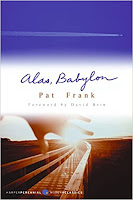
Alas, Babylon was written during the height of the Cold War, and it fits right in with other contemporary works with an apocalyptic theme, like Nevil Shute's novel On the Beach or the movie Dr. Strangelove or How I learned to Stop Worrying and Love the Bomb. Published in 1959, the book tells the story of the aftermath of atomic war and the surviving citizens of a small town in Central Florida. All communications and supply lines are cut off, and neighbors have to rely on each other in order to survive. An unremarkable small town lawyer finds himself in charge all of a sudden, and he rises to the occasion. It was a good read, and I recommend it.
Lay That Trumpet in Our Hands by Susan Carol McCarthy was published in 2003, and it is based on real events and involves some real historical figures. The subject is the racial violence that plagued Florida in the 1950s. Florida has had a very troublesome history when it comes to race, with numerous lynchings, the Rosewood and Ocoee Massacres, and house bombings in the 1950s, just to cite a few. Trumpet is the story of a white family in central Florida, told through the eyes of the twelve-year old daughter. It begins with the lynching of 19-year old family friend, committed by the Ku Klux Klan, which had a very strong presence in Central Florida. As events unfold, the story involves Thurgood Marshall, the true story of the Groveland Four (see the book Devil in the Grove), and Harry T. Moore. Moore was the head of the Florida NAACP, and, on Christmas night 1951, he and his wife were murdered when a dynamite bomb blew up their home. He was the first NAACP officer to be specifically targeted, and he and his wife are considered to be among the first martyrs of the 1950s Civil Rights Movement. I liked the book well enough, but it's obvious that the author was greatly influenced by one of the greatest novels ever written, To Kill a Mockingbird. There are a lot of similarities including the young girl storyteller with a crusading Atticus Finch-style father. I could see this book being used for middle schoolers, but Harper Lee did it much better.